
The phrase “infinite demand for power” might sound like startup hyperbole — unless you’ve been tracking what’s happening to the North American grid lately. Between the AI data center buildout, the accelerating EV transition, and a climate that’s growing more extreme by the year, utilities are scrambling for every megawatt they can find.
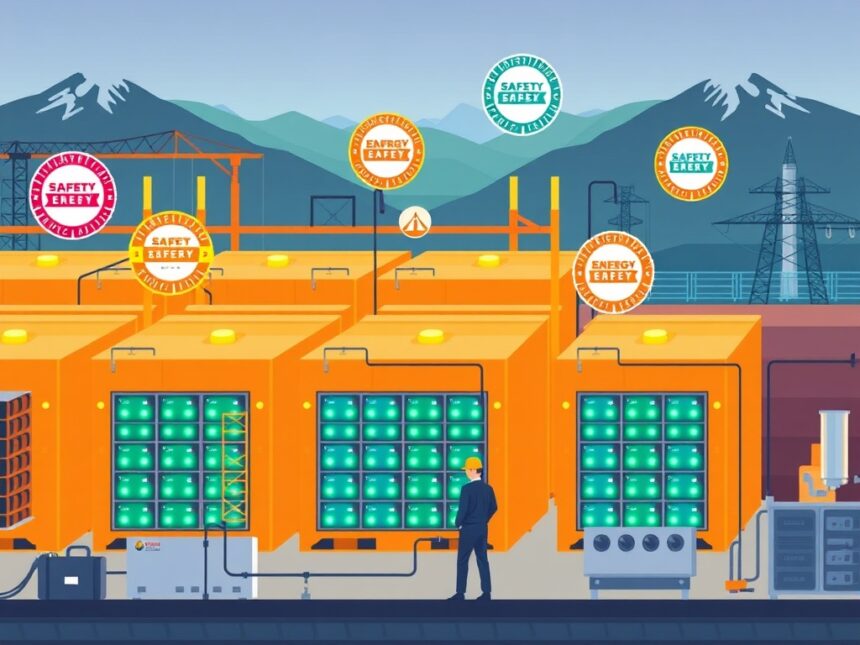
Canadian-American startup Moment Energy just raised a $40 million Series B round (totaling over $100 million in funding) to scale a solution that’s both clever and grounded: repurposing retired electric vehicle batteries into UL-certified grid-scale energy storage systems. The round was led by Evok Innovations, with participation from W23 (the grocery retailer fund), Amazon’s Climate Pledge Fund, and In-Q-Tel.
What makes Moment Energy stand out in the crowded energy storage space isn’t just the technology — it’s the certification moat they’ve built.
The UL Certification Edge
Most second-life battery companies test their products against UL certification standards without actually going through the full certification process. Moment Energy, by contrast, is the first company to obtain actual UL Certification for repurposed EV battery storage systems. CEO Edward Chiang told TechCrunch that competitors have been lobbying to make UL certification easier for second-life batteries rather than investing in the engineering to earn it.
This matters far beyond compliance paperwork. UL certification directly impacts insurability. Chiang pointed out that competitors often leave an automaker’s original battery management system intact, essentially tricking the pack into behaving as though it’s still on the road. If one of those systems catches fire, the liability chain is a lawyer’s dream — automakers can claim they never authorized tampering with their safety systems. Moment’s approach, supported by Liberty Mutual’s venture arm as an investor, sidesteps that entire risk profile.
For startup founders, this is a masterclass in building defensibility. Rather than racing to be cheapest, Moment Energy invested in the hard regulatory work early, creating a barrier that’s far more durable than a technology lead.
Beyond Silicon Valley’s Hype Loop
Chiang offered a refreshing critique of Silicon Valley startup culture. Moment Energy, he emphasized, is focused on “delivering product” rather than “raising the next round.” With roughly 72 employees, the company has already secured supply agreements with Mercedes-Benz and Nissan, a $20 million Department of Energy loan, and is building a gigawatt-scale factory in Austin, Texas.
He attributes this grounded approach partly to the company’s Canadian roots. “A lot of Canadian companies focus on building a tangible business and a real, profitable business, as well as a high-growth business,” Chiang said. “We’re pretty realistic when it comes to deployment.”
It’s a pointed contrast to the Bay Area playbook of signing five-to-ten-year deals purely to fuel fundraising narratives.
The Geopolitical Picture
There’s a larger story here. According to BloombergNEF, Chinese companies currently control roughly 72% of the global long-duration energy storage market. Moment Energy’s approach — using domestically available used EV batteries to build storage solutions — isn’t just an environmental win. It’s a North American energy security play, and investors (including the CIA-backed In-Q-Tel) are taking notice.
Takeaway for Founders
Moment Energy’s trajectory offers three lessons for hard-tech startups:
- Regulation is a feature, not a bug. The UL certification that competitors tried to work around is now Moment’s strongest competitive advantage. Don’t avoid the hard regulatory path — own it.
- Real customers beat hype. A $20 million DoE loan and supply agreements with automakers carry more weight than any fundraising narrative.
- Geopolitics creates market opportunity. When 72% of a critical market is controlled by a strategic competitor, there’s room for domestic alternatives — with or without policy tailwinds.
Original source: TechCrunch