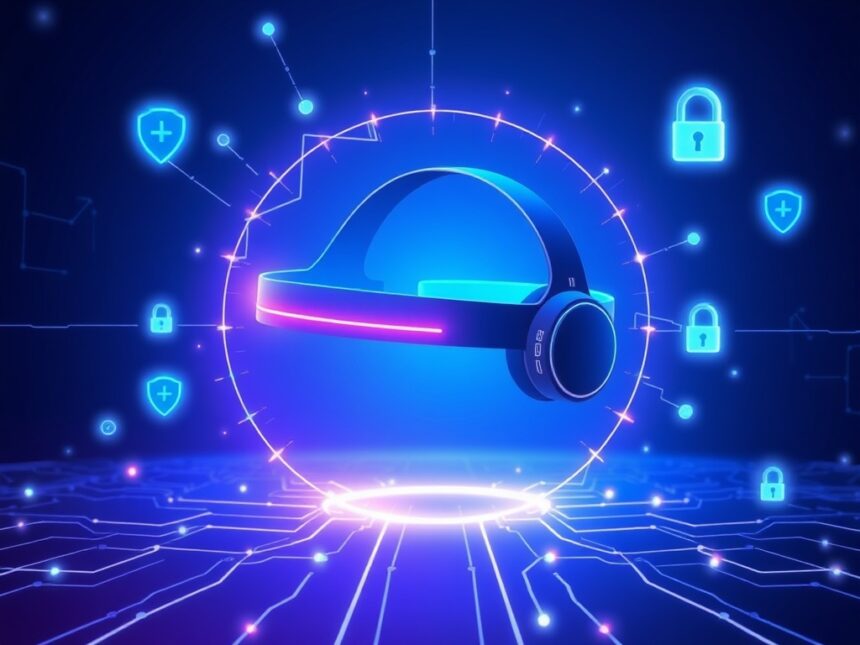
A single sentence from a Wired interview this week has reignited one of the most consequential debates in consumer technology: how much of your brain should a headset be allowed to see?
Ramses Alcaide, CEO of Boston-based neurotech startup Neurable, told Wired that the company is “protecting the data, being as ethical as possible” as it announced a licensing push to embed its EEG brain-sensing technology into more consumer headsets. The line was clearly meant to reassure. Instead, it set off alarm bells across the privacy community — and for good reason.
The Promise and the Panic
Neurable isn’t a new name in neurotech. Founded in 2015, the company has spent years developing non-invasive EEG sensors that can read focus levels, cognitive load, and even emotional states from outside the skull. It’s impressive tech — the kind of thing that lets you know when you’re actually paying attention in a meeting or when your brain is fried from three hours of deep work.
What’s new is the business model. On April 28, Neurable announced it would license its EEG processing stack to hardware partners, embedding brain-sensing capabilities into a range of headsets and helmets slated for release through 2026 and 2027. Think fitness trackers for your brain, built into devices you already wear.
That expansion is what makes the timing of the Wired interview so sensitive. Moving from a controlled product launch to an open licensing model means Neurable’s software — and the neural data it processes — will soon live inside devices made by companies with very different privacy postures.
Why Privacy Advocates Aren’t Buying It
The CEO’s assurance that Neurable is “protecting the data” and “being as ethical as possible” is the kind of language that sounds comforting until you think about it for more than a minute. “As ethical as possible” is not a legal standard. It’s not a published data policy. It’s not a third-party audit. It’s a vibe.
Privacy advocates have been here before — with Fitbit, with Facebook, with the entire smart home industry. Companies start with good intentions and centralized control, and over time the incentives shift toward monetization, sharing, and surveillance. Brains are not steps walked or photos shared. Neural data is arguably the most sensitive biometric data a person can generate: it reflects focus, fatigue, emotional state, and potentially much more.
The concern isn’t that Neurable is malicious today. The concern is that once brain-sensing data flows through a licensing pipeline — through partners, through cloud processing, through advertising ecosystems — the protections that exist today become much harder to enforce.
The Regulatory Window Is Narrowing
Regulators in the EU and some US states are already probing wearable data flows. Colorado recently expanded its privacy law to cover neural data explicitly, and the EU’s AI Act includes provisions that touch on biometric processing. But neurotech is moving faster than legislation, and a licensing model like Neurable’s could put meaningful regulation in a race against mass adoption.
For startups in this space, the writing is already on the wall. The companies that win the neurotech market won’t just be the ones with the best sensors or the fastest processing. They’ll be the ones that build privacy into the architecture — local-only processing, open-source audit trails, opt-in data sharing with clear revocation. Neurable’s “trust us” framing worked for a research-stage startup. It won’t scale.
What This Means for Founders
If you’re building anything in the biometric or wearable space, Neurable’s current predicament is a preview of your future. “We protect your data” is table stakes — it’s what every company says. The question is whether you can prove it.
Some practical takeaways:
- On-device processing isn’t optional anymore. If raw neural or biometric data ever leaves the device, you need to justify why, in detail, and make it auditable.
- Licensing your tech to partners multiplies your privacy surface area. If a partner mishandles data flowing through your stack, the reputational damage still lands on you.
- Privacy regulations are coming faster than you think. Colorado’s neural data amendment passed in 2024. More states and countries will follow. Build for compliance from day one.
- “Ethical” isn’t a compliance framework. Document your policies, publish them, and submit to third-party audits. Trust requires evidence, not statements.
Neurable is doing genuinely interesting work. The technology is real, the licensing model makes business sense, and the potential for good — helping people understand their own cognitive patterns — is huge. But the company’s biggest challenge isn’t technical. It’s convincing a skeptical public that brain data in the cloud is safe.
That’s a trust problem no amount of EEG precision can solve.
This article is based on reporting from Wired and Glass Almanac.