
When Microsoft pledged in 2020 to match 100% of its hourly energy use with clean power by 2030, it was widely celebrated as one of the most ambitious corporate climate commitments in technology. The target was tougher than the annual matching goals adopted by most of its peers — it required the company to source clean energy that closely tracked its actual power consumption on each grid, hour by hour.
Now, six years later, that pledge is reportedly on the chopping block — and the culprit is the very thing driving the entire tech industry forward: AI.
According to a report from TechCrunch, Microsoft is weighing whether to delay or scale back its hourly clean energy matching goal as its AI data center buildout strains the company’s ability to meet such rigorous targets. The internal debate, first reported by Bloomberg, reflects a growing tension between Big Tech’s net-zero ambitions and the voracious energy demands of artificial intelligence.
Why Hourly Matching Matters
Most corporate renewable energy pledges use annual matching — a company buys enough solar or wind credits to offset its total yearly consumption. It’s an effective mechanism that has accelerated renewable deployment globally, but it has a blind spot. As the article explains, annual targets “are effectively accounting tricks” — a company can buy solar power at midday, sell the excess to the grid, and claim the credit even if its actual operations run on fossil fuels at night.
Hourly matching is more honest. It forces companies to build or buy clean energy that aligns with their actual consumption patterns in real time. It’s the kind of rigor that a genuinely sustainable grid demands. But it’s also expensive and logistically complex — and the AI boom has made it dramatically harder to achieve.
The Data Center Paradox
Microsoft isn’t alone in this bind. Google, Meta, and Apple have all set aggressive climate targets, and all of them are racing to scale AI infrastructure. But data centers consume enormous amounts of electricity — and they need it 24/7. Solar panels only generate during the day. Wind is intermittent. Batteries help, but they’re expensive at utility scale.
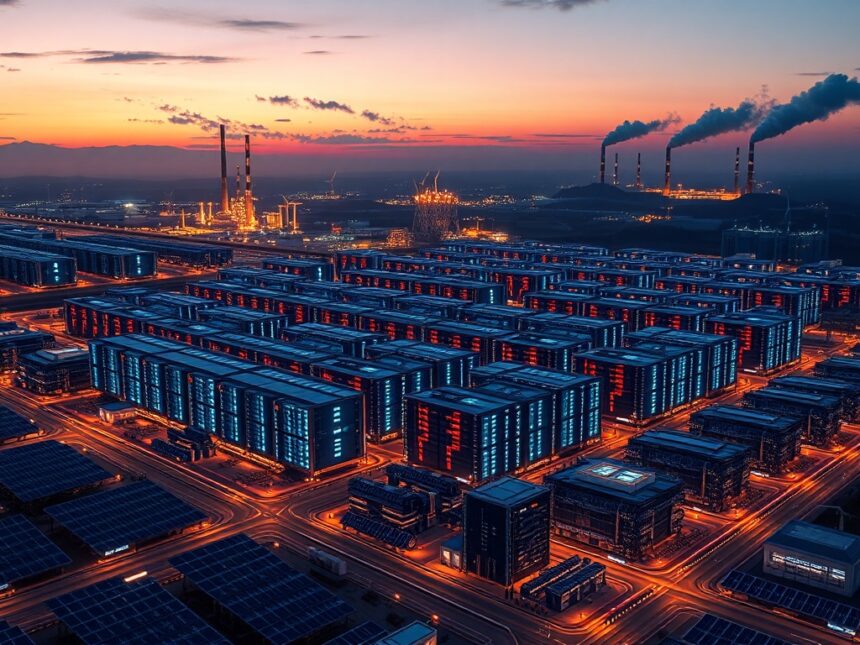
Last month, Microsoft announced it was working with Chevron and Engine No. 1 to build a massive natural gas power plant in West Texas that could generate up to 5 gigawatts. That’s enough to power roughly 3-4 million homes. It’s a clear signal that, for now, the AI infrastructure buildout is leaning heavily on fossil fuels.
What This Means for Startup Founders
This story carries lessons that extend well beyond Microsoft’s corporate strategy. If one of the world’s largest and most resource-rich companies is struggling to reconcile AI growth with clean energy commitments, what does that mean for the startup ecosystem?
First, energy availability is becoming a competitive moat. As data center capacity tightens and power grids face increasing strain, the ability to secure reliable, affordable energy will become a strategic advantage. Startups building compute-intensive AI products — whether in training, inference, or real-time applications — should be thinking about where their infrastructure lives and how much it will cost to run in 2028 versus today.
Second, green AI is a market opportunity. The tension between AI and clean energy creates space for innovation. Startups working on energy-efficient AI chips, smarter cooling systems, grid optimization software, and carbon-aware compute scheduling are solving a problem that the hyperscalers are desperate to crack. If you can help data centers use less power — or use cleaner power more effectively — you have a massive addressable market.
Third, regulatory risk is real and growing. As public opposition to data centers intensifies — over pollution, water use, and rising power prices — governments are starting to push back. Microsoft’s ability to sell communities on new data centers weakens if it abandons its green commitments. For startups that depend on cloud infrastructure, regulatory friction could translate into higher costs, longer deployment timelines, and geographic constraints.
The Bigger Picture
Microsoft hasn’t made a final decision yet. The company declined to comment on the internal debate, telling TechCrunch it continues “to look for opportunities to maintain our annual matching goal.” But the writing is on the wall: doubling down on both AI dominance and hourly clean energy matching may not be simultaneously feasible — at least not on the current technology and policy trajectory.
The Founder’s Takeaway
The AI revolution is real, but it runs on electrons. And those electrons, for the moment, still come with a significant carbon cost. Founders building AI-native companies should factor energy constraints into their long-term planning — not just from a cost perspective, but from a strategic one. The companies that figure out how to do AI sustainably will have a story that resonates with investors, customers, and regulators alike.
This article was adapted from reporting by Tim De Chant at TechCrunch. Read the original piece here.