
India’s First Space Tech Unicorn Signals a New Era for Deep Tech Venture Capital
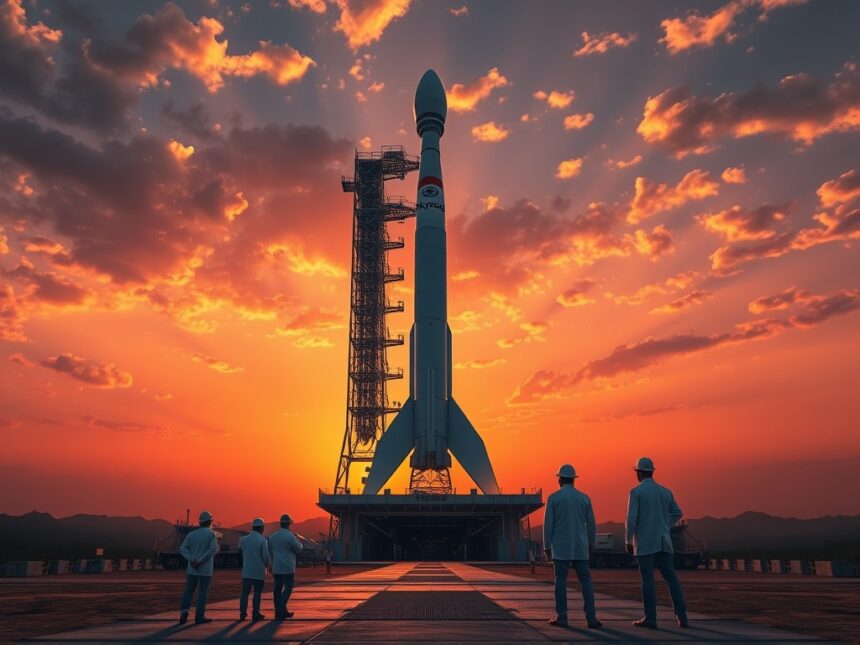
When Skyroot Aerospace rolled its Vikram-1 rocket to India’s spaceport in April, it carried more than just satellite payload aspirations. The Hyderabad-based startup was wheeling in a proof point for an entire thesis: that capital-intensive deep tech — once considered too risky, too slow, and too capital-hungry for traditional venture capital — has found its moment.
This week, that thesis received a resounding validation. Skyroot raised $60 million at a $1.1 billion valuation, making it India’s first space tech unicorn. The round, co-led by Sherpalo Ventures (the firm of Alphabet board member Ram Shriram) and Singapore sovereign fund GIC, included roughly $50 million in primary equity and $10 million in structured debt managed by BlackRock affiliates.
The valuation marks a remarkable trajectory: doubling from the $500 million pre-money valuation Skyroot commanded in its 2023 round, vaulting past the billion-dollar milestone before the company has even reached orbit.
From ISRO Engineers to Unicorn Founders
Founded in 2018 by former Indian Space Research Organisation (ISRO) engineers Pawan Kumar Chandana and Naga Bharath Daka, Skyroot has methodically built a small satellite launch capability comparable to Rocket Lab or Firefly Aerospace. Its Vikram-1 rocket can deliver up to 350 kilograms to low Earth orbit — squarely aimed at the fast-growing constellation and small satellite market.
The company first made headlines in November 2022 with Vikram-S, India’s first privately developed rocket launch. That suborbital mission was always a stepping stone. The real prize is Vikram-1’s maiden orbital flight, targeted for June after completing qualification tests.
Demand is already strong, with roughly one-third of expected customers in India and the remaining two-thirds international — a healthy mix that de-risks the business from any single market.
What the Space Tech Unicorn Tells Us About Deep Tech Investing
Skyroot’s rise is part of a broader pattern that startup founders should watch carefully. After years where the venture world favored asset-light, software-only plays, capital is increasingly flowing to companies building physical things:
- Frontier tech is back in vogue. Crunchbase noted in its April unicorn analysis that frontier labs and robotics companies dominated the list of new unicorns. The departure from the “SaaS or bust” era is palpable.
- Strategic debt is joining the mix. BlackRock’s participation through structured debt shows that sophisticated institutional capital is finding creative ways to participate in pre-revenue deep tech companies.
- Sovereign funds are placing bigger bets. GIC’s co-leadership alongside Sherpalo signals that state-backed funds see space as a strategic, not just financial, asset class.
India’s Space Reforms as a Blueprint
Skyroot could not exist without India’s 2020 space sector reforms, which opened ISRO facilities to private companies and allowed end-to-end commercial space activities. The government estimates India’s space economy at $8.4 billion today, projected to grow to $44 billion by 2033, with nearly 400 space-tech startups operating as of early 2026.
For founders in other regulated industries, the lesson is clear: regulatory tailwinds create asymmetric opportunities. The startups that positioned themselves early — before the reforms were fully implemented — are now the ones crossing the billion-dollar threshold.
Looking Ahead: What’s Next for Skyroot
The fresh capital will go toward scaling Vikram-1 manufacturing, increasing launch cadence, and developing Vikram-2 — a heavier one-ton-class rocket with a cryogenic stage targeted for 2027. With Ram Shriram joining the board, Skyroot also gains a Silicon Valley heavyweight with deep experience scaling technology companies.
The Takeaway for Startup Founders
Skyroot’s journey from a 2018 garage startup to a 2026 unicorn — before its first orbital launch — carries a powerful message for founders building in capital-intensive sectors. The venture ecosystem is no longer allergic to hardware, infrastructure, or deep technology. But the bar has shifted: you need clear milestones, credible government partnerships, and a customer base that spans geographies.
In an era where AI startups can raise billions on demo-day demos, Skyroot’s story is a reminder that the old-fashioned approach — building real things that fly, fail, iterate, and eventually reach orbit — still commands respect. And increasingly, it commands capital.
— Based on reporting by Jagmeet Singh for TechCrunch.