
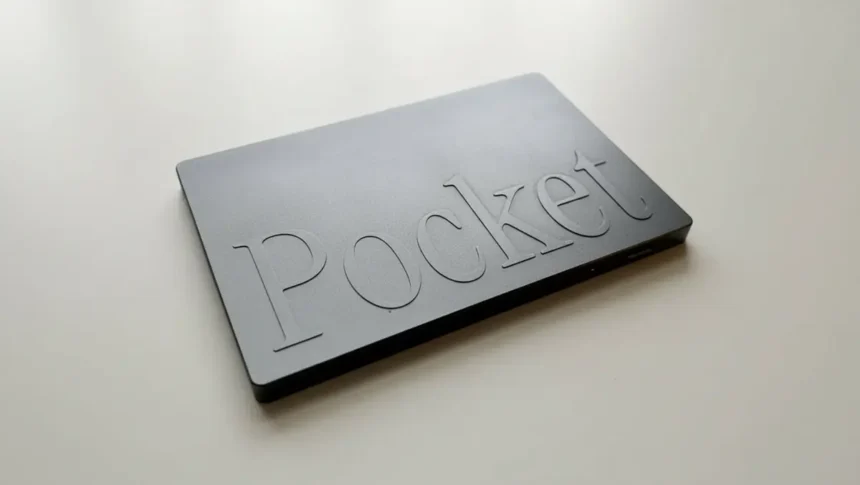
Y Combinator-backed Pocket has raised $11 million from Accel, Y Combinator, and ElevenLabs CEO Mati Staniszewski, betting that dedicated hardware for AI note-taking has room to grow in a crowded market.
Pocket sells a $129 credit card-shaped puck that sticks to the back of your phone and promises unlimited recordings, transcriptions, and to-do items with no subscription required. The startup says it has sold more than 130,000 units since launching last year.
Unlike AI gadgets like Rabbit or Humane that struggled to find traction, companies building dedicated meeting recorders and transcribers have actually seen real demand. Competitors like Plaud, Mobvoi, Anker, Viaim, and Vibe are all chasing the same opportunity. But Pocket believes its design, packaging, and pricing give it an edge.
“You can record on the go, offline, and in the field, which is exactly how lawyers, salespeople, doctors, real estate agents, construction workers, and students use Pocket today,” said Accel partner Cecilia Wang.
The puck records conversations and transcribes them via a phone app. Users can generate summaries, ask an AI assistant questions, create mind maps, and transform text into different templates. A $200-per-year plan unlocks unlimited AI summaries, daily highlights, and file attachments.
Pocket was founded by Akshay Narisetti, a founding member of rival note-taking startup Omi, and Gabriel Dymowski, who previously founded a blockchain-based document management startup. For enterprise customers, Pocket offers custom workflow management, webhook support, and integrations with Google Calendar, OneDrive, Obsidian, Claude, and Cursor.
Devices like Pocket face competition from software players like Granola, Zoom, Fireflies, Otter, and Read AI. But device-first companies like Plaud, which is on track for $100 million in annual software revenue, are already proving the model can scale.
Source: TechCrunch