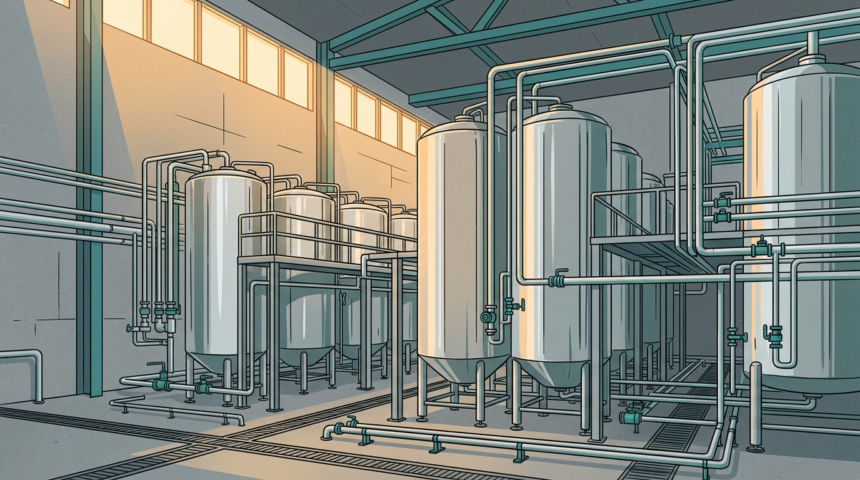
German materials developer BIOWEG has broken ground on what it says will be Europe’s largest bacterial cellulose factory, a 10,000 tonne-a-year plant in Elsdorf, North Rhine-Westphalia.
Construction runs through the fourth quarter of 2026, with first commercial volumes expected in 2028. The fully automated facility sits inside the region’s sugar industrial complexes so it can ferment molasses and other side streams meters from where they are produced, cutting emissions and operating costs. BIOWEG has committed about 60% of its total funding to the site.
The product is a biodegradable alternative to fossil-based polymers and intentionally added microplastics. Europe restricted intentional synthetic polymer microparticles under the 2023 REACH amendment, and formulators in fertilizer, cosmetics and detergents have a decade to remove them, creating demand for a replacement that matches polymer performance.
BIOWEG raised a €16M Series A in September 2025 and has since added €14M, including €2M in equity from Rabo Ventures that extends the round to €18M. Total funding now stands at €35M. Its Quakenbrück pilot plant stays running through construction, scaling from about 100 to at least 200 tonnes a year to supply commercial batches through 2027 and 2028.
Chief executive Prateek Mahalwar framed the plant as the hardest financing step in industrial biotechnology, with the German government and the EU sharing the risk. The company expects around 30 high-tech jobs, drawing on talent from Cologne, Düsseldorf, Aachen and the Ruhr.