
European defence procurement has spent two years arguing about sovereign capability. A Munich-headquartered startup just raised the money to actually ship it.
Hypersonica closed a €100M Series B co-led by Lightspeed and General Catalyst, with Plural and 201 Ventures returning. Engineering sits across Munich and a wholly owned London subsidiary, and the company says the whole stack is built in Europe without ITAR restrictions, meaning no US export licence gates its sales.
Co-founders Philipp Kerth and Marc Ewenz are chasing the physical problem that kills most hypersonic programmes. Above Mach 5, aerodynamic heating makes conventional aerospace materials and control surfaces useless, so the team has built around new materials, control architectures and avionics.
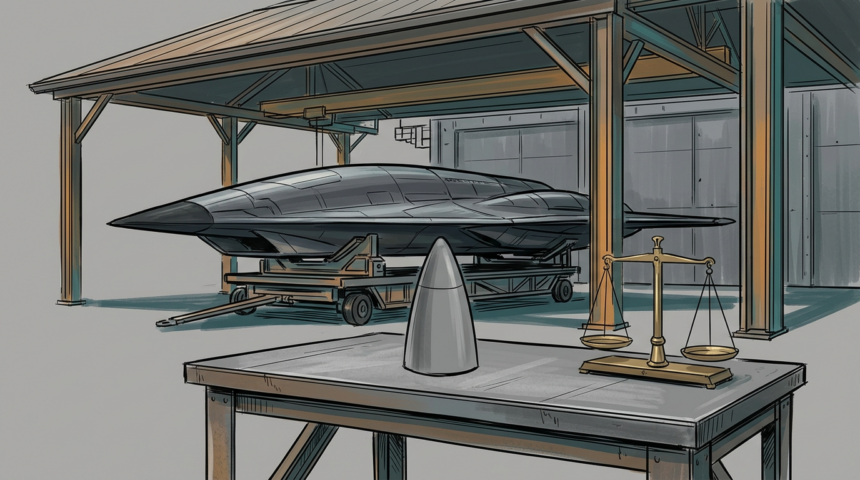
Its HS-1 prototype has flown beyond Mach 6 over more than 300 kilometres, making it the first privately funded European defence company to hit that mark. The company claims its development model cuts costs by more than 80% against conventional programmes.
The capital arrives as the buying side stops debating. Britain has earmarked about €921M over four years for a UK-German deep precision strike programme under the Trinity House agreement, and a NATO-led initiative has signalled roughly €44B of investment in deep strike capabilities over the coming decade.
The funding cadence is worth noting. Hypersonica raised a €23.3M Series A in February, so this is a roughly fourfold step up in under a year, a pace that was unthinkable in European defence a few cycles ago.
The company targets fully developed systems by 2029 and says the round creates hundreds of engineering and manufacturing jobs across the UK and Germany.
For the wider ecosystem, defence has become one of the few European sectors where a hardware startup can raise nine figures before it has shipped a production unit.