Most circular-economy pitches ask industry to build something new. Releaf is arguing for the opposite: use the machines that already exist, and change only what goes into them.
The Ukrainian-founded, Paris-based company converts fallen urban leaves into fibres and fillers for paper, packaging and board. It has signed on French municipalities, German cities and three of France’s largest paper groups, and its materials have been trialled by brands including Chanel, L’Oreal, Samsung, Rituals and Uber Eats.
Why the founder stopped pitching a direct fight
Chief executive Valentyn Frechka says positioning against the paper giants was the original mistake. Framing yourself as a breakthrough that competes head-on with established producers usually fails, he argues, because those businesses already own the infrastructure and supply chains.
Releaf shifted to supplying converters, the firms that turn board into finished packaging, rather than trying to sell raw fibre to brands that care about the finished box.
The two processes behind the material
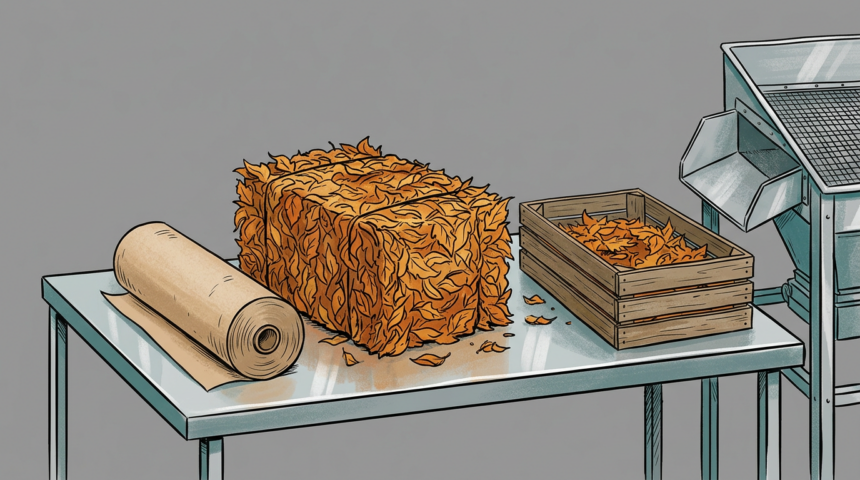
Drying and milling the leaves mechanically yields a filler that existing paper machinery can take without modification. Chemistry and heat handle the second route, refining out short fibres with much the same behaviour as the cellulose pulled from trees.
Feedstock is the interesting part. Cities already sweep and collect leaves for sanitation reasons, then compost or burn them. Compost carries little economic value, and incineration runs into sand and minerals that chew up boilers. Releaf bales the material to store roughly 400 kilograms per cubic metre, then processes it on demand.
The company ran about 1,000 tonnes through its pilot line last year and expects roughly double that next season. It closed a September partnership with Italian producer RDM Group and its Dutch subsidiary Eska on leaf-based laminates for luxury packaging.