
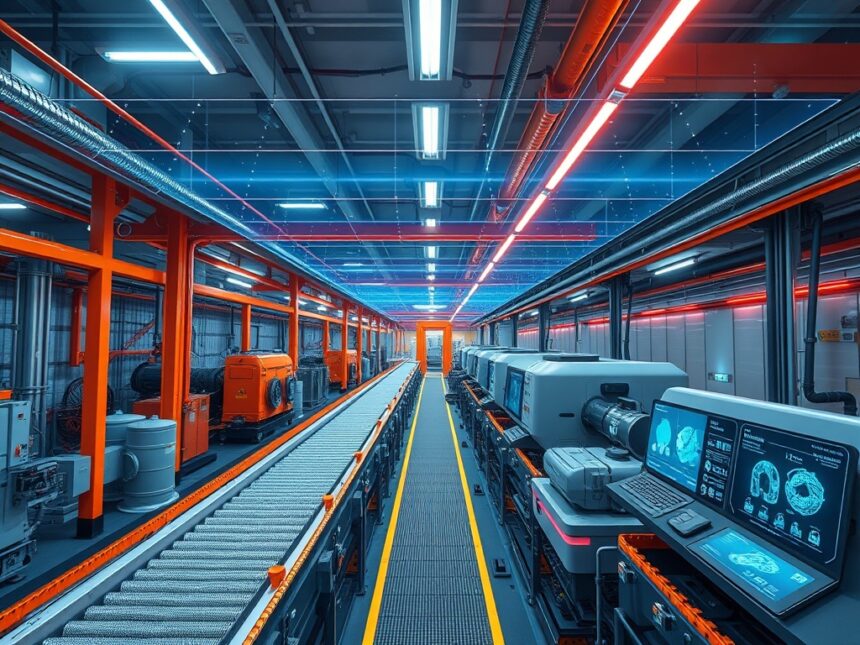
In the race to build the circular economy, there’s an uncomfortable truth most people don’t think about: the software running waste and recycling plants hasn’t meaningfully evolved since the 1990s.
Spreadsheets, disconnected CAD files, and tribal knowledge passed between veteran engineers still underpin the design and operation of most of the planet’s waste infrastructure. It works, barely. But with tightening regulations, growing waste volumes, and mounting pressure to recover more material at higher purity, the old ways are creaking.
That’s the gap a small team in Galicia, Spain is trying to bridge. Humara, an AI-powered SaaS platform for waste infrastructure, just closed a €1.2 million Seed round to scale its physics-based design engine and roll out an AI copilot for live plant operations, with plans to expand across Europe and Latin America.
Design a Waste Plant in Days, Not Months
Founded in 2021 by Laura Rodríguez Álvarez, Martín Nogueira Salgueiro, and Víctor González, Humara has built a platform that simulates how 82 distinct waste materials behave as they move through real separation equipment — everything from optical sorters to air classifiers to magnetic separators. Instead of engineers manually calculating mass balances in Excel and sketching layouts in CAD, the platform runs physics-based simulations that compress the entire design cycle from roughly four months to a matter of days.
The round was led by Impact Shakers, with new investor Inclimo joining and full follow-on participation from existing backers Zubi Capital, Ship2B Ventures, and the company’s angel syndicate. To put the raise in context: €1.2 million is modest by SaaS standards, but for a sector that has historically been overlooked by venture capital, it signals a shift. Climate tech investors are waking up to the fact that waste infrastructure — the “ugly duckling” of the circular economy — represents a massive software opportunity.
From Design to Live Operations: The Duplantis AI Copilot
Humara’s pitch to customers goes beyond design. The startup has built Humara Operate, a layer that extends the same simulation engine into daily plant management. By creating a real-time Digital Twin that ingests live SCADA signals, optical sorter data, and operational KPIs, the platform gives plant-floor teams predictive insights and decision support.
Early results are concrete: plants using Humara Operate report a 4% reduction in landfill reject rates, 4% higher material recovery, an €800,000 annual profit uplift, and 5–7% lower operating expenses per plant. For operators running thin margins in a commodity business, those numbers add up fast.
Next up is Duplantis, an AI copilot that connects directly to live plant data and surfaces recommendations in real-time — turning hours of manual diagnosis into seconds of actionable insight.
250 Plants and Counting
Humara already counts major operators among its customers — Veolia, FCC, PreZero, EGF, Ecoembes, and Bianna — who collectively have used the platform to design over 250 plants across Europe and Latin America. The company reports that these customers see cost savings of over 70% and can bid on complex RFPs with greater confidence.
“Every plant we help design today will operate for the next 25 years — and most of them are still being engineered in Excel. That gap is what gets us out of bed,” said Laura Rodríguez Álvarez, co-founder and CEO of Humara.
Yonca Braeckman, founder and CEO of Impact Shakers, added: “Waste infrastructure is the unglamorous backbone of the circular economy, and the tools running it have been frozen for decades. Humara is going to change the sector.”
The Big Picture for Founders
Humara’s story carries a lesson that extends well beyond waste management. The startup didn’t invent a flashy new category — it applied modern AI and simulation tools to an industry that had been ignored by software innovation for decades.
That pattern — finding an undigitized, unglamorous industrial sector and rebuilding its tooling from scratch — is one of the most underrated startup playbooks in climate tech today. The incumbents are too focused on their core hardware businesses to build software. The customers are desperate for better tools. And the margins compound because each new customer’s plant operates for 25+ years, creating recurring SaaS revenue with high switching costs.
With the new funding, Humara plans to expand into more European and Latin American markets, take on new waste streams, and push Duplantis into production. If they execute, the team of three founders from Galicia may just set the operating standard for waste plants across Europe and beyond.
Disclosure: This article is based on reporting originally published by Rahul Raj at EU-Startups. Used with attribution.