
The story of Cerebras Systems reads like a semiconductor thriller — one that could have ended in bankruptcy rather than a $60 billion IPO. The AI chip maker went public on Thursday in a blockbuster listing that made billionaires of its co-founders and cemented its place as one of the most valuable semiconductor companies in the world. But the path to that milestone was paved with near-catastrophic failures and millions of dollars vanishing each month.
“We were spending about $8 million a month,” CEO Andrew Feldman told TechCrunch, recalling the company’s darkest days in 2019. “At this point, we had incinerated nearly $200 million trying to solve one technical problem.”
Every few weeks, Feldman walked into board meetings to deliver another variation of the same grim report — more failures, more money gone, no solution in sight. It’s a scene all too familiar to founders chasing hard tech breakthroughs, where the timeline between “this might work” and “we’re out of runway” shrinks with every missed milestone.
The Wafer-Scale Bet That Nearly Broke Them
Cerebras was founded on an audacious premise: instead of dicing silicon wafers into tiny chips and wiring them together — the industry standard for 50+ years — why not use the entire wafer as one giant chip? For AI workloads that demand massive parallel compute, it made theoretical sense. But the semiconductor industry had concluded it was practically impossible.
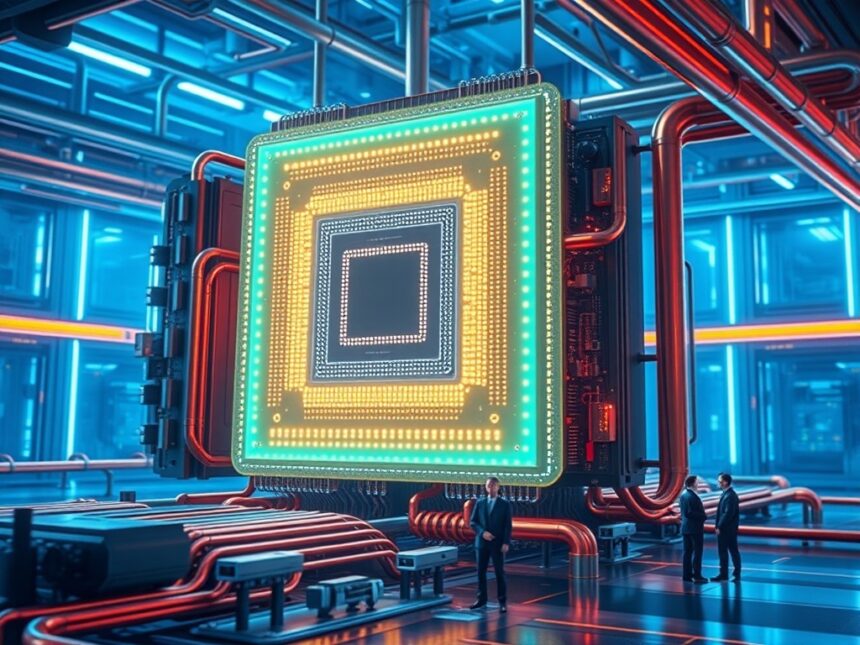
The company’s chips ended up 58 times larger than conventional processors, consuming 40 times more power than anything previously engineered. Standard heat sinks didn’t exist for something this size. No vendors had cooling solutions. No manufacturing partners could handle the specs. The brightest minds in microprocessor engineering had tried and failed for decades to solve these same problems.
The real bottleneck wasn’t chip design — Cerebras managed to manufacture its mega-chip with TSMC — but “packaging.” This is the unglamorous but critical step of attaching the silicon to a motherboard, routing power across a massive surface, and solving the thermal and data movement challenges that come with it. The team destroyed an enormous number of prototype chips before they got anywhere close.
The Moment It All Clicked
In July 2019, after countless iterations and nearly $200 million burned, the team finally got it working. They installed the packaged chip into a computer, powered it on, and everyone just stood there watching.
“Watching a computer run is about as exciting as watching paint dry. But there we were watching lights flashing on the computer, stunned that we’d solved this,” Feldman said. “That was one of the greatest moments of my life.”
That breakthrough came from a founding team that had already built and sold SeaMicro to AMD for $334 million. They knew what success looked like — and they still almost didn’t make it.
The OpenAI Connection
Today, OpenAI is both a customer and a strategic partner, having loaned Cerebras $1 billion secured by warrants for roughly 33 million shares — shares now worth over $9 billion. That arrangement included a temporary exclusivity clause restricting Cerebras from selling to certain OpenAI competitors (widely understood to be Anthropic), though Feldman emphasized the restriction is limited in time and designed to guarantee OpenAI got the capacity it needed.
Interestingly, the company is still too small to serve multiple rapidly-growing AI labs simultaneously. Feldman likens selling AI compute to an all-you-can-eat buffet — Cerebras is deliberately working with only a portion of the potential market until it scales up.
What Startup Founders Should Learn
Cerebras’ journey offers several lessons for founders pushing technical frontiers. First, hard tech takes longer and costs more than anyone anticipates — often by an order of magnitude. Second, the problems that nearly kill your company are rarely the ones you expected; for Cerebras, it wasn’t the chip design but the packaging. Third, having a founding team with prior exit experience helped them sustain confidence through years of failure.
Perhaps most importantly, Cerebras shows that “impossible” industry problems are sometimes just unsolved — and being the team that solves them can build a $60 billion company. The hard part is surviving long enough to get there.
Original reporting by TechCrunch. Read the full story here.