In the race to dominate autonomous mobility, conventional wisdom says the first mover wins. Waymo has thousands of robotaxis operating in over a dozen cities, an Alphabet-sized war chest, and a decade-long head start. But Nuro — the autonomous delivery startup spun out of Google’s self-driving project nearly a decade ago — is making a compelling case that coming in second might actually be the smarter play.
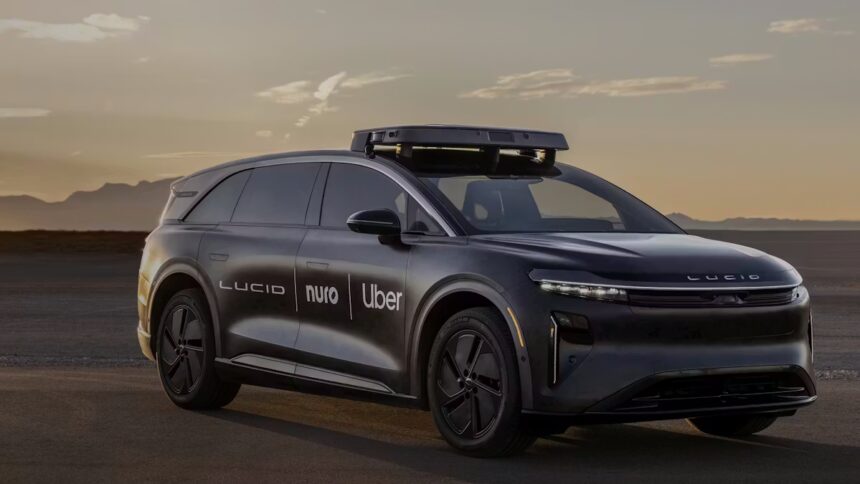
Nuro cofounder and co-CEO Dave Ferguson recently laid out a “second mover” thesis that every startup founder should pay attention to. After pivoting from last-mile delivery to robotaxis in 2024, Nuro struck a landmark three-way deal with Uber and Lucid Motors to deploy tens of thousands of autonomous vehicles across the US. The company plans to launch its robotaxi service in San Francisco later this year, having secured its first operating permit this month.
Rather than viewing Waymo’s dominance as a barrier, Ferguson sees it as a strategic asset. Waymo’s successes validate the market. Its stumbles — and there have been several, from traffic tie-ups to regulatory scrutiny over remote assistance — provide free R&D lessons. Every edge case Waymo encounters in the field is a data point Nuro’s engineers can study, simulate, and solve before their own vehicles ever hit the streets.
“There is a lot of value in this classic second mover perspective,” Ferguson said in an interview with The Verge. “In some of the rare cases where they’re having challenges, we’re using those to kick the tires on our system.”
<2>Why the second mover strategy works
The second mover advantage is well-established in tech — think Google entering search after AltaVista, or Facebook dominating social after MySpace. The principle is simple: let the pioneer absorb the cost of market education, regulatory friction, and operational discovery, then enter with a refined product informed by real-world data.
In autonomous vehicles, those costs are enormous. Waymo has spent billions navigating complex permitting processes, public trust issues, and edge-case engineering. Nuro gets to watch all of that unfold from the sidelines while building its own system with the benefit of hindsight.
What makes Nuro’s position unique is the structure of its partnerships. Unlike vertically integrated players like Waymo or Tesla, Nuro is licensing its autonomous driving technology to Lucid, which produces the vehicles on its own assembly line already equipped with Level 4 capability. Uber then buys and operates the fleet, handling depot management, rider acquisition, and customer support. It’s a horizontal model that lets Nuro focus entirely on what it does best: the AI driving system.
<2>Lessons for startup founders
Nuro’s approach offers several takeaways for founders building in capital-intensive, regulated markets:
Don’t confuse being first with being right. First movers carry the heaviest burden of market education, regulatory approvals, and operational discovery. If you can enter after the pioneer has validated the model — and learn from their mistakes — you can achieve better unit economics with less capital burn.
Partnerships can accelerate timelines dramatically. Nuro went from delivery bots to a coast-to-coast robotaxi launch plan in under two years by leveraging Uber’s network and Lucid’s manufacturing. Building everything in-house would have taken five times as long and cost ten times as much.
Focus on the moat, not the whole castle. Nuro doesn’t need to own the cars, the charging infrastructure, or the rider app. Its moat is the AI driving system. By concentrating engineering resources on that core competency and partnering for everything else, they maximize their leverage.
Transparency builds trust. Ferguson acknowledged that robotaxis suffer from a public trust deficit. Nuro plans to publish driving statistics and performance data — following Waymo’s transparency model — rather than treating its operations as a black box. In markets where public perception is a barrier to adoption, openness is a competitive advantage.
<2>The bottom line
For founders debating whether to sprint for first place or hang back as a disciplined second mover, Nuro’s trajectory offers a nuanced answer: it depends on the cost of being first and the value of learning from someone else’s mistakes. In markets where the pioneer can absorb regulatory and operational risk, second can be a very comfortable — and potentially more profitable — position.
The robotaxi landscape is still wide open, and Nuro hasn’t proven its model at scale yet. But its strategic patience, partnership architecture, and willingness to learn from the leader’s stumbles make it one of the most interesting autonomous vehicle plays to watch in 2026.
Original reporting by Andrew J. Hawkins at The Verge.