
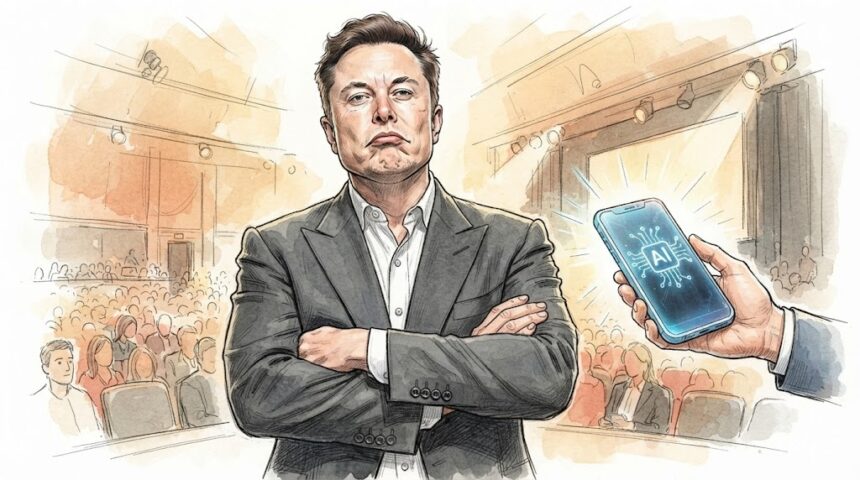
When the world’s most valuable rocket company starts building a phone-sized AI device, you have to wonder: is this a serious product play or just Musk being Musk?
According to The Wall Street Journal, SpaceX has shown investors a prototype of a handset-like AI gadget — described as sleeker and slimmer than an iPhone, blending elements of a touchscreen phone with a dedicated AI assistant like the Rabbit R1. The design is reportedly still early-stage and could change before any public debut.
Elon Musk was quick to shoot down the report, calling it “utterly false” on X. But SpaceX has declined to comment further, and the company’s massive manufacturing infrastructure — alongside Tesla’s — means it could theoretically produce such a device at scale if it wanted to.
What makes this interesting isn’t just the gadget itself. SpaceX has been signaling ambitions in wireless connectivity through Starlink Mobile, which could eventually compete with major carriers. One analyst even suggested T-Mobile or AT&T could become acquisition targets for the rocket builder. A proprietary AI handset that runs on Starlink’s network would tie together Musk’s sprawling empire in a way none of his other products have.
The reported device would run on its own operating system and integrate technology from xAI, Musk’s AI company that SpaceX acquired earlier this year. This avoids dependence on Android and allows native AI interfaces — but it also means competing directly with OpenAI, which is working with Jony Ive on its own AI device. OpenAI recently hired Apple’s former Vision Pro VP Paul Meade, signaling serious hardware ambitions.
The timing raises eyebrows. The AI hardware graveyard is already crowded — Humane and Rabbit both struggled to find buyers for their visions. Whether SpaceX can succeed where others failed depends on whether this is a real product roadmap or just another ambitious prototype that never ships.
Source: TechCrunch