
TechflierTechflierTechflier
  • Home
  • News
  • Features
  • Spotlight
  • About
    • Mission
    • Services
    • Contact
  • Newsletter
  • Shop
    • All Items
    • By Category
      • Bags
      • T-Shirts
    • Cart
Search
© 2025 Techflier. All Rights Reserved.
Reading: Commonwealth leads fusion funding race with $3.94B banked
Share
Font ResizerAa
TechflierTechflier
Font ResizerAa
  • Home
  • News
  • Features
  • Spotlight
  • About
  • Newsletter
  • Shop
Search
  • Home
  • News
  • Features
  • Spotlight
  • About
    • Mission
    • Services
    • Contact
  • Newsletter
  • Shop
    • All Items
    • By Category
    • Cart
Have an existing account? Sign In
Follow US
© 2025 Techflier. All Rights Reserved.
News

Commonwealth leads fusion funding race with $3.94B banked

A TechCrunch census of fusion startups shows Commonwealth Fusion Systems has banked $3.94B, about a third of all private capital in the sector.

Techflier Staff
Last updated: August 17, 2026 2:16 am
Techflier
Share
SHARE

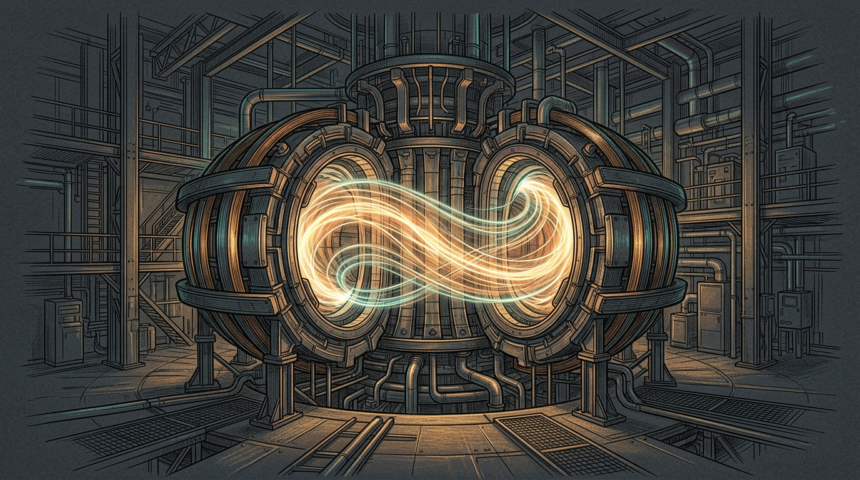
Fusion power has crossed from punchline to pipeline, and the money proves it. A new TechCrunch census of every fusion startup that has raised over $100M shows Commonwealth Fusion Systems alone has banked $3.94B, roughly a third of all private capital that has flowed into the sector.

The wave is powered by three advances: faster chips, better AI, and high-temperature superconducting magnets. Add the 2022 National Ignition Facility experiment that produced more energy than it consumed, and founders suddenly had a story investors could model.

Commonwealth leads the pack. Its Sparc tokamak, wound with superconducting tape, is expected to switch on in late 2026 or early 2027, followed later this decade by Arc, a 400-megawatt commercial plant. Backers include Breakthrough Energy Ventures and Bill Gates. Helion runs the most aggressive timeline, promising electricity in 2028 with Microsoft as its first customer. The Everett, Washington company raised $465M in June at a $15.5B valuation, bringing its total committed capital to $3.2B.

TAE Technologies, spun out of UC Irvine in 1998, is the veteran of the group, still refining its field-reversed configuration approach. The census data, compiled by FusionX, underscores how concentrated the sector is: a handful of companies hold most of the capital, and each one is betting on a different reactor geometry.

For startup watchers, the takeaway is simple. Fusion is no longer a science project funded by philanthropists, it is a venture asset class with real deadlines, real customers, and a widening gap between the leaders and everyone else.


Nvidia’s Billion Startup Empire: What Jensen Huang’s Investment Spree Means for the Next Wave of AI Companies
Paris voice AI lab Gradium lands Nvidia funding and opens Bay Area office
Acurio Ventures launches €115M fund for VC secondary market
Open-source AI infrastructure startup Together AI raises $800M at $8.3B
AI video platform PixVerse extends Series C to $439M with Alibaba
TAGGED:clean energyCommonwealth Fusion Systemsfusion energyHelionstartupsventure capital
SOURCES:TechCrunch
Share This Article
Facebook Copy Link Print
Previous Article Z.ai’s GLM-5.3 hunts 2,400 software flaws ahead of open release
Next Article French startup Kog bets software can make GPUs decode faster

Get Some Gear


Quick Links

  • News
  • Features
  • Spotlight
  • Videos

About Techflier

  • About Techflier
  • Services
  • Contact Us
  • Privacy
  • Legal

Indices

TechflierTechflier
Follow US
© 2026 Techflier. All Rights Reserved.
Welcome Back!

Sign in to your account

Username or Email Address
Password

Lost your password?