A Finnish satellite operator has finished a trial with an unnamed European security body that tested whether hyperspectral imaging beats conventional orbiters at finding illegal drug crops.
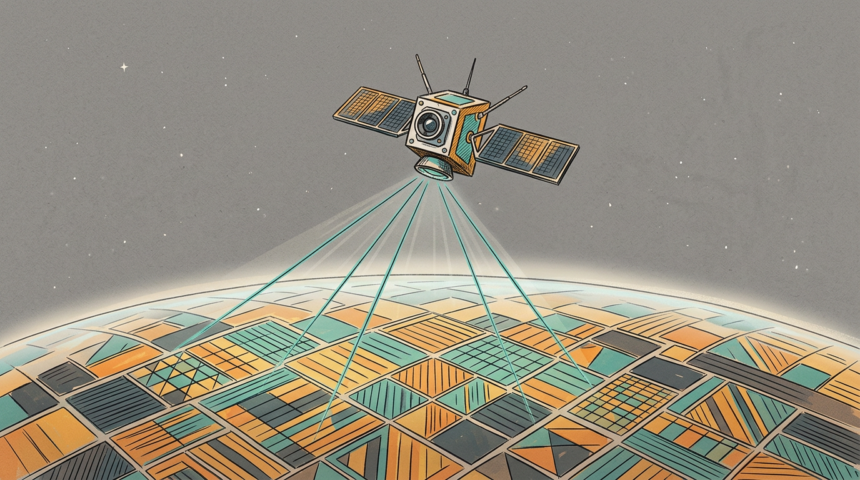
The work focused on Afghan opium poppy. By fusing the company’s Hyperfield bands with Copernicus Sentinel-2 passes and machine classification, it catalogued 248,889 fields in Helmand Province and marked 8,835 of them as probable poppy. Kuva Space says the hybrid approach cut mistaken identifications compared with Sentinel-2 alone, because illicit planting otherwise looks much like legal crops of similar appearance.
Illicit crops are hard to separate from legal planting using conventional multispectral imagery, especially where they are grown among similar-looking crops. Adding hyperspectral bands reduced false positives compared with Sentinel-2 alone, according to the company.
Myanmar now leads the world in opium production. Its poppy acreage grew 17% during 2025 even as Afghanistan’s output stayed dramatically below pre-ban levels, according to the UN’s 2026 World Drug Report.
That migration puts a premium on monitoring that scales across territory authorities cannot easily reach on foot. Kuva Space’s pitch is to point investigators at the fields most worth the trip, rather than replace them.