Estonia’s Skeleton Technologies has pushed past a $1B valuation after a raise backed by Siemens, money earmarked for US manufacturing and Silicon Valley research.
The funding follows a €33M first close reported earlier this year, and it takes the Tartu company into unicorn territory on the strength of an unusual argument: that power delivery, not chip supply, is the binding constraint on AI growth.
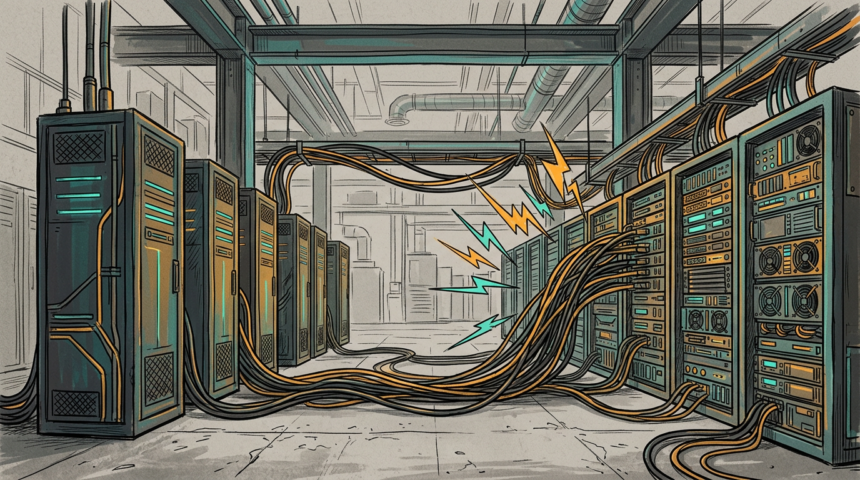
The numbers behind that claim are striking. The International Energy Agency expects global data-centre electricity consumption to nearly double from roughly 485 TWh in 2025 to 950 TWh by 2030, with AI-focused facilities tripling. AI workloads also consume power erratically, with GPU clusters swinging between draw levels in ways legacy grids handle poorly.
Skeleton’s supercapacitors attack that fluctuation directly. Built on a proprietary Curved Graphene material engineered for fast power delivery and long cell life, they sit close to the workload and smooth surges before they propagate. The company claims up to 40 per cent energy savings and double-digit GPU performance gains.
Chief executive Taavi Madiberk puts it bluntly, saying the constraint is not how many GPUs an operator can buy but how much compute it can extract from every GPU and every megawatt available.
Founded in 2009, Skeleton supplies data centres, grids, defence systems and critical infrastructure. The US build-out is aimed squarely at hyperscaler demand.