Two former Intel engineers think the server rack has a geometry problem, and they have $65M to prove it. Mueon Corp. emerged from stealth with a Series A led by semiconductor fund Maverick Silicon, joined by Intel’s venture arm, Oregon Venture Fund, Wellington Capital and IQT.
Founders Wilfred Gomes and Jack Hwang spent years inside Intel working on the hard parts – die stacking and the processes that etch transistors into wafers. Mueon’s chief executive now wants to apply that knowledge at the system level.
Cubelet and the case against flat boards
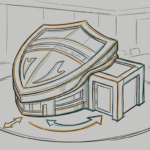
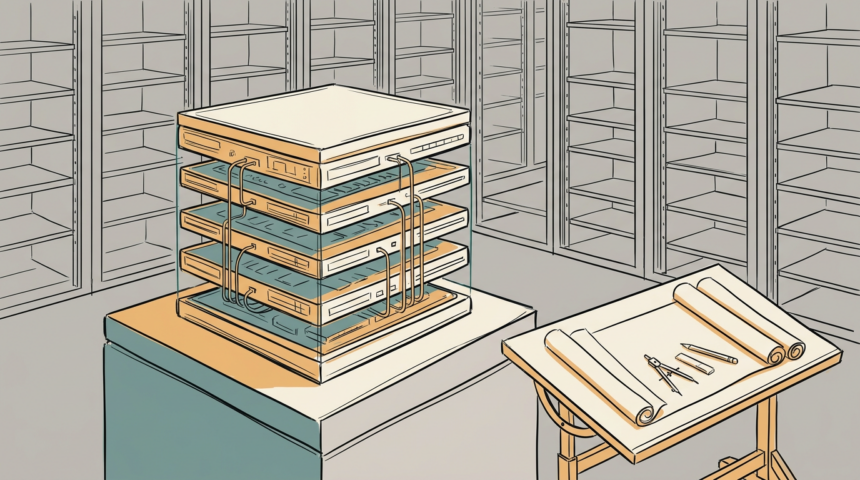
Conventional servers spread their core parts across a motherboard in two dimensions. Mueon’s Cubelet architecture instead stacks compute and memory on top of one another.
Proximity is the whole argument. Packing components tighter means data travels shorter physical distances between them, which cuts the power burned in transit and speeds the computation up. The company puts the potential gain as high as ten times better power and cost efficiency than current hardware.
Why memory bandwidth matters now
The pitch lands in a market where AI workloads are increasingly limited by how fast data moves, not by how many calculations a chip can run. Memory and storage have become the bottleneck that accelerator vendors and their customers keep circling.
Mueon is not alone in chasing stacked system designs, but it has the credibility of two founders who helped build the manufacturing techniques underneath them. The company has not said when its first modules reach customers.