Drug discovery still leans on cell cultures that sit motionless in plastic wells, which is nothing like the conditions inside a human body. Vitroscope has raised $7M to make living tissue observable over days instead of moments.
Flow is the missing variable
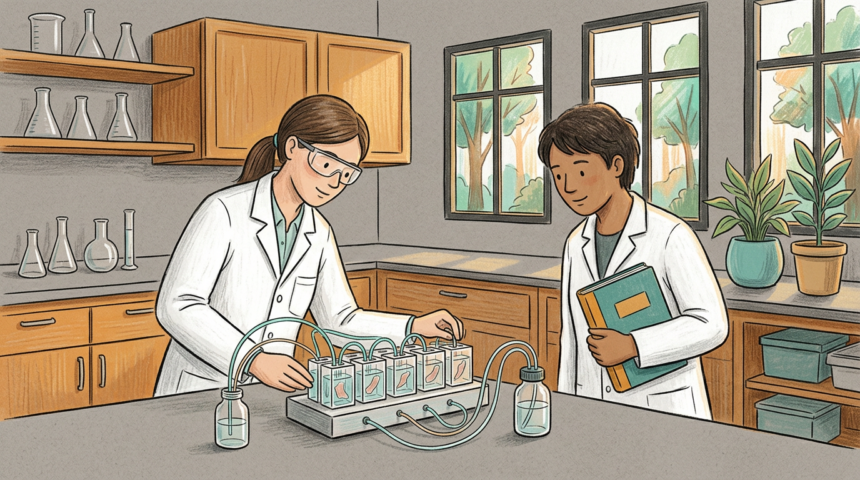
Organoids and fresh human tissue have become standard research models, but static plates cannot reproduce the flow and oxygen levels they need, which caps how long experiments last and how much data they yield. The startup’s benchtop platform, vitro.alive, pumps fluid through living tissue while controlling oxygen, pH and temperature and imaging cells in real time. It runs six parallel experiments and works with the inverted microscopes labs already own.
The round
Cerberus Ventures and YZR Capital split the role of lead investor on the $5M seed. Arcas Ventures, Golden Egg Check, Devico Invest and several business angels came in behind them. Norway’s research council supplied the other $2M, taking lifetime investment to $8.8M. A higher-throughput version, vitro.scale, is in development for 96 parallel experiments, with customer testing in 2027 ahead of a planned 2028 launch.
Early evidence
Working with Instant Bio, the company kept vascularised human brain organoids under perfusion for seven days. Elsewhere, hepatocytes taken directly from donor organs self-assembled into structured cultures on the device, a result the same cells did not produce in conventional plates. YZR’s Markus Feuerecker describes the output as physical AI infrastructure: every experiment generates proprietary data that compounds.
The commercial question is whether pharma labs will pay for longitudinal data before regulators ask for it.