Commonwealth Fusion Systems has raised another $1 billion, pushing total capital raised to about $4 billion as the MIT spinoff races to build a grid-scale fusion power plant. The company announced the round this week, calling it the largest single funding haul among fusion startups since its own $1.8 billion round in 2021.
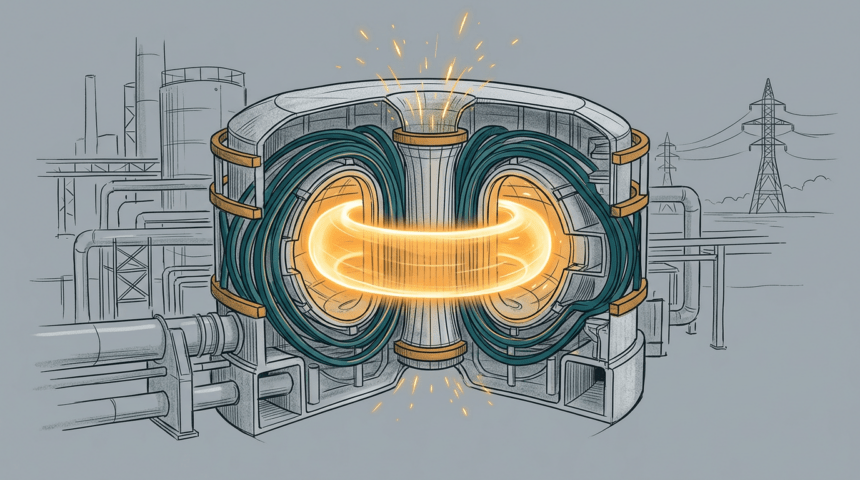
The new money came from a broad set of institutional investors, including pension funds, sovereign wealth funds, and infrastructure and industrial corporate partners, the company said. It follows a year of major progress on SPARC, the experimental tokamak that Commonwealth Fusion says will demonstrate net energy gain, plus early construction work on ARC, the commercial plant it wants to plug into the grid by the early 2030s.
Fusion has become one of the most heavily funded corners of clean tech, with a handful of startups chasing the same physics breakthrough that has eluded researchers for decades. Commonwealth Fusion’s edge is its high-temperature superconducting magnets, which it says let it build smaller, cheaper reactors than designs that rely on conventional electromagnets.
The company, based in Devens, Massachusetts, has raised more than any other private fusion developer and counts major energy and industrial firms among its backers. Its latest round signals that institutional capital is now comfortable writing billion-dollar checks for a technology that is still years from commercial revenue.
Whether the company can hold its schedule is the open question. Fusion advocates argue the payoff justifies the risk, pointing to the promise of near-limitless, carbon-free power; skeptics note that no fusion device has yet produced more energy than it consumes. Commonwealth Fusion expects SPARC to change that equation.