
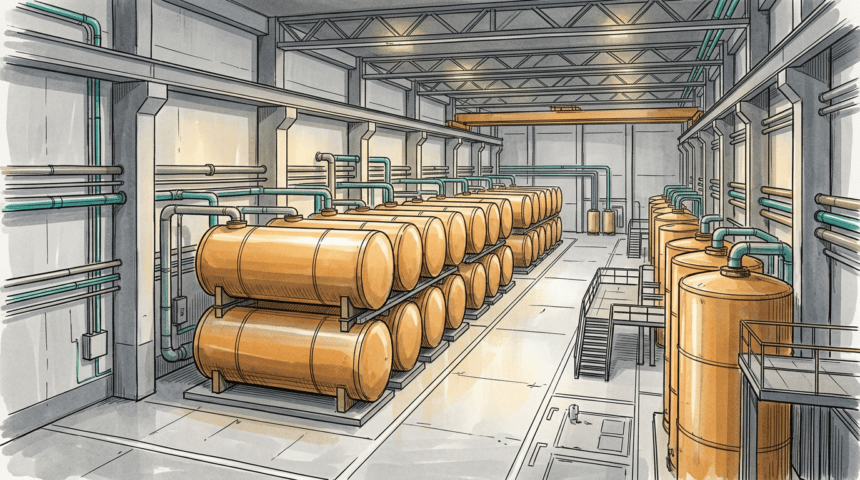
The Pentagon is putting $1.4 billion behind a US battery startup that wants to break China’s grip on a critical material. Sila has landed the Department of Defense loan to expand production of silicon-carbon anode material at its Moses Lake, Washington factory.
The money targets a well-known supply-chain weakness. Most lithium-ion anodes rely on graphite, and producers in China dominate that trade, leaving American firms from carmakers to defense contractors hunting for alternative materials. Sila’s silicon-based output gives buyers a homegrown option that avoids the tariff and geopolitical headaches of imported inputs.
Silicon anodes promise a 20% to 40% storage gain over graphite, which could mean longer-lasting cells or smaller, lighter batteries. Both traits appeal to militaries that increasingly rely on electric and hybrid systems, with wars in Iran and Ukraine driving demand.
Sila’s Washington plant, which began operating in September, can currently produce about 2 gigawatt-hours of anode material a year. The company plans to expand capacity fivefold, enough to support more than 100,000 electric vehicles annually.
The federal money follows a $300 million round in July led by Atreides Management and Sutter Hill Ventures, pushing Sila’s total private fundraising past $1.5 billion. Mercedes and Panasonic are already lined up as customers.
The loan marks one of the largest government bets on next-generation battery chemistry and could open the door to defense contracts for Sila. It also signals how far Washington will go to build a domestic supply chain for battery materials as geopolitical tensions reshape the industry.