
TechflierTechflierTechflier
  • Home
  • News
  • Features
  • Spotlight
  • About
    • Mission
    • Services
    • Contact
  • Newsletter
  • Shop
    • All Items
    • By Category
      • Bags
      • T-Shirts
    • Cart
Search
© 2025 Techflier. All Rights Reserved.
Reading: Ka-band silicon from a KU Leuven spin-out pulls in €15M
Share
Font ResizerAa
TechflierTechflier
Font ResizerAa
  • Home
  • News
  • Features
  • Spotlight
  • About
  • Newsletter
  • Shop
Search
  • Home
  • News
  • Features
  • Spotlight
  • About
    • Mission
    • Services
    • Contact
  • Newsletter
  • Shop
    • All Items
    • By Category
    • Cart
Have an existing account? Sign In
Follow US
© 2025 Techflier. All Rights Reserved.
News

Ka-band silicon from a KU Leuven spin-out pulls in €15M

Matterwave Ventures and FORWARD.one led the round for the KU Leuven spin-out.

Techflier Staff
Last updated: September 19, 2026 1:32 am
Techflier
Share
SHARE

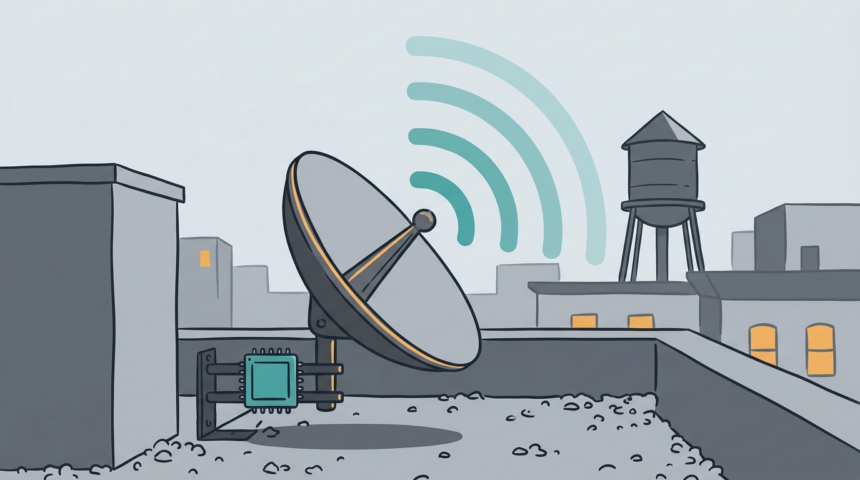
TUSK IC, a fabless semiconductor company spun out of KU Leuven, has closed a €15 million Series A to put its Ka-band satellite chips into volume production.

Matterwave Ventures, FORWARD.one and the Flanders Future Tech Fund, managed by PMV, led the round. The Schaubroeck family joined, alongside continued backing from existing investors.

The Antwerp company builds highly integrated millimetre-wave circuits and antenna modules for satellite communications, industrial sensing and automotive radar. Founded in 2018 out of KU Leuven’s mmWave research group, it spent its early years designing radar chips before expanding into satellite hardware in 2022.

Its core claim is economics. As satellite constellations multiply, the bottleneck shifts to the ground segment, where user terminals must become cheaper and more capable. TUSK IC argues that pairing mmWave performance with standard CMOS manufacturing is what makes high-performance terminals scalable.

Investors frame the opportunity beyond orbit. As Silviu Apostu, a partner at Matterwave, puts it, what will settle the future of connectivity is not only the hardware flying overhead but the technology that lets ground terminals be built cheaply at volume – the choke point TUSK IC attacks.

Europe has been pushing to build sovereign capacity across the space stack, from launch to components. Ground-segment silicon has drawn less attention than satellites themselves, even though it determines how much bandwidth a constellation can actually deliver to customers.
AI agents take over factory purchasing as Felicis backs Magentic
Beijing rocket maker i-Space banks nearly ¥1B Series E tranche
Limerick ERP firm banks €13M from BGF for European push
Manycore ships Lux3D to turn text into 3D scenes in seconds
Legora courts a $10B round as legal AI money keeps flowing
TAGGED:Belgiumfundingsatellite communicationssemiconductorsSeries Aspace tech
SOURCES:EU-Startups
Share This Article
Facebook Copy Link Print
Previous Article Nvidia and Google back an alliance to make data centers flexible
Next Article D-Robotics lands $400M as its robot chips top 8 million shipments

Get Some Gear


Quick Links

  • News
  • Features
  • Spotlight
  • Newsletter
  • Store

About Techflier

  • About Techflier
  • Services
  • Contact Us
  • Privacy
  • Legal

Indices

TechflierTechflier
Follow US
© 2026 Techflier. All Rights Reserved.
Welcome Back!

Sign in to your account

Username or Email Address
Password

Lost your password?