
A chip-based eye scanner from the Bristol startup Siloton is being reworked for children, under a project run out of UCL’s Great Ormond Street Institute of Child Health.
With funding from the National Institute for Health and Care Research, the institute has taken delivery of one of Siloton’s optical coherence tomography systems. OCT uses light to build detailed images of the inside of the eye, but existing machines are large, costly and normally found only in hospitals and optometry centres.
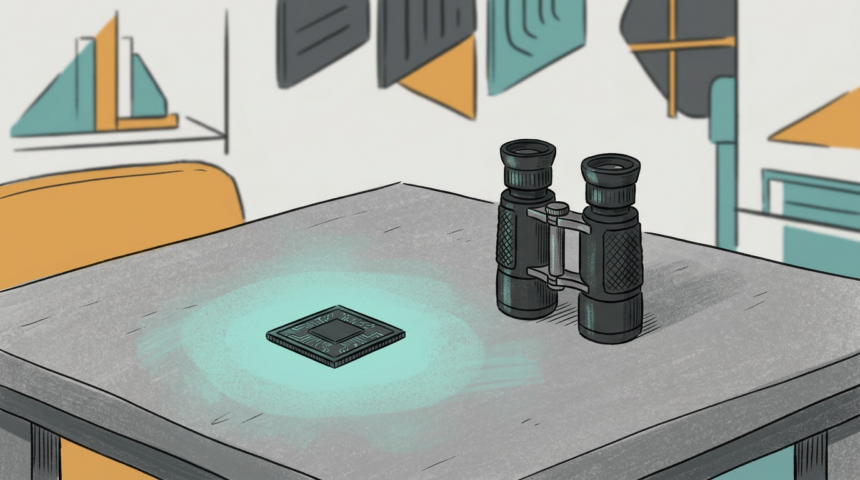
The Akepa device replaces a tabletop of heavy, fragile optics with one chip no bigger than a £1 coin inside a binocular-style housing. Adult patients tested an earlier version last year.
Making it work for children needs physical changes. The lenses will be tuned to focus at the right depth inside a child’s eye, and the casing reshaped to fit smaller faces so stray light does not spoil the image. Professors Ameenat Lola Solebo and Marinko Sarunic are co-developing the version.
If it works in the community or at home, the payoff is monitoring for potentially blinding conditions without repeated hospital trips. Co-founder and chief executive Alasdair Price points to the same pressures adults face, from travel to missed school, as the reason the hardware had to get smaller in the first place.