Powerlattice, which designs silicon for AI power delivery, has quietly banked $86 million of a planned $111 million equity sale, per a regulatory notice filed with the Securities and Exchange Commission on October 30.
Eighteen accredited investors put money in, and $25 million is left to sell, the Form D indicates. The company has not commented publicly, and the filing names neither backers nor round structure.
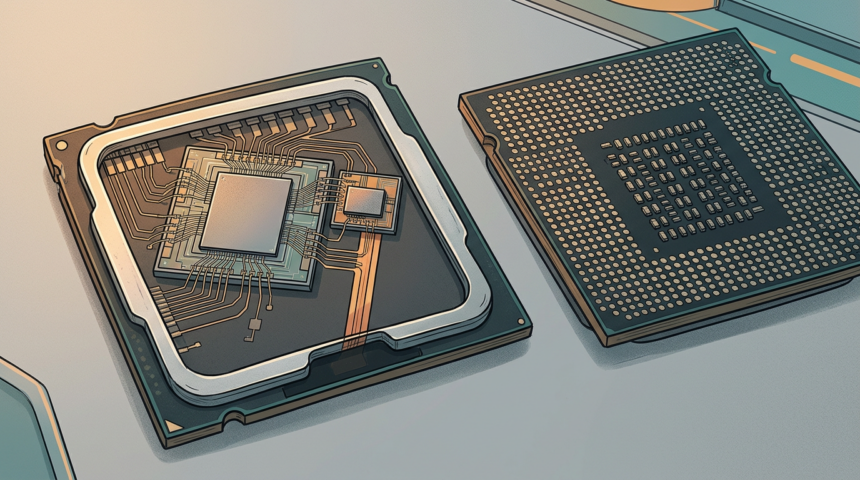
Its technology attacks a problem every AI cluster faces: getting power into the processor without burning a share of it as heat. Motherboard traces that carry current from distant regulators turn much of it into waste energy. Powerlattice instead tucks micro-regulators inside the chip package, delivering voltage vertically at the point of load, and claims that design can cut total compute power needs by more than 50%.
An October 26 demo, per the company, showed off a voltage regulator chiplet billed as the industry’s first monolithic part of its kind. The silicon ran an emulation rig built to stress it with spiky electrical loads.
The team behind it, Peng Zou, Gang Ren and Sujith Dermal, three semiconductor veterans, incorporated the company in 2023. An earlier $31 million had been raised, among it a Series A of $25 million unveiled in November 2025 that put former Intel chief executive Pat Gelsinger on the board.
Power delivery has become one of the tighter constraints on data center buildouts. At a kilowatt per package, distribution losses turn into both an electricity bill and a cooling problem, and a package-integrated part can answer load swings faster than a board-level component.
The money arrives while investors hunt for silicon that eases power limits instead of adding compute that stresses them further.