SpaceX’s $55B Terafab Gamble Could Reshape the AI Chip Landscape — and the Startup Ecosystem Along With It
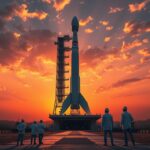
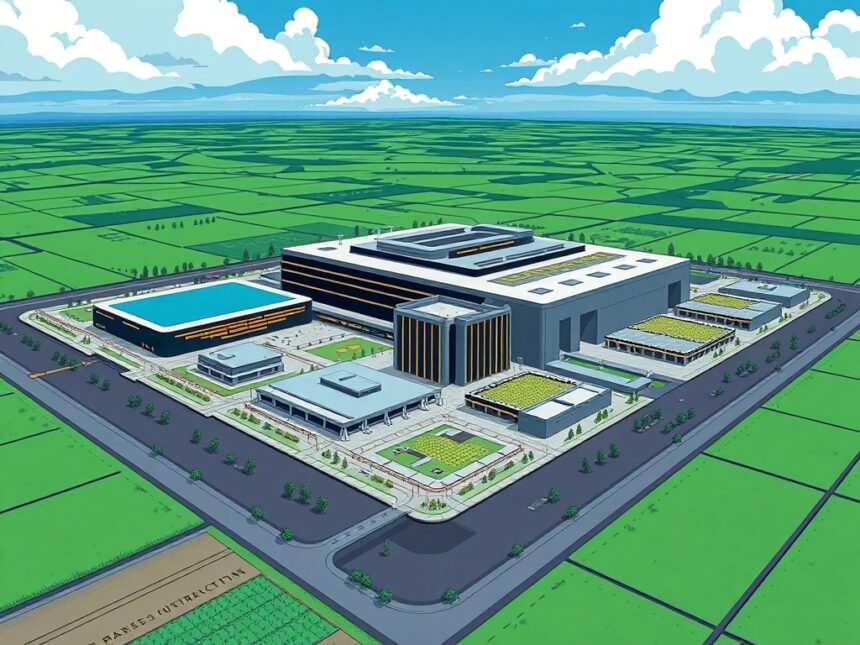
When most people think of SpaceX, they picture rockets landing upright on drone ships or Starship prototypes arcing over the Texas coast. But Elon Musk’s space company is quietly preparing to build something far less glamorous — and potentially far more consequential for the global tech industry: a $55 billion semiconductor fabrication plant in Grimes County, Texas.
Dubbed “Terafab,” the facility is being designed to produce custom AI chips at a scale that borders on the surreal. According to a public hearing notice filed with the county, the first phase alone carries a capital investment tag of $55 billion. If fully built out across all planned phases, that figure could reach $119 billion — eclipsing the entire annual GDP of some small nations. The Grimes County Commission will hold a public hearing on June 3 to consider the property tax abatement SpaceX is seeking.
From Rocket Fuel to Compute Power
SpaceX announced Terafab in March with characteristically ambitious targets. Musk claimed the plant would produce enough chips to support up to 200 gigawatts per year of computing power on Earth — and up to one terawatt in space. Those numbers are difficult to contextualize because nothing on that scale currently exists. The world’s largest chip fabs (TSMC’s facilities in Taiwan) cost roughly $20–30 billion to build. SpaceX is talking about spending two to four times that, all in one facility, on Texas soil.
What makes this more than just another Musk spectacle is the roster of partners already committed. Intel announced in April that it would help design, fabricate, and package chips at Terafab, marking the first major external foundry commitment for Intel’s semiconductor services business. Tesla plans to use Intel’s forthcoming 14A process node for chips manufactured at the plant. And xAI — Musk’s artificial intelligence company, which he recently confirmed will be folded into SpaceX and rebranded as SpaceXAI — will be a primary customer for the facility’s AI training and inference silicon.
Why This Matters for Startups
For founders and investors watching from outside the Musk orbit, Terafab represents a structural shift in how AI infrastructure gets built. The current AI boom is bottlenecked by compute — specifically, by the availability of NVIDIA’s H100 and B200 GPUs, which are manufactured almost exclusively at TSMC’s fabs in Taiwan. Any geopolitical disruption in the Taiwan Strait could cripple AI progress globally. Musk’s bet is effectively a trillion-dollar hedge against that single point of failure.
If Terafab succeeds, it opens up a second major supply chain for high-performance AI chips outside of Asia. That has direct implications for startups building AI-native products: more compute availability, more competitive pricing, and — critically — more geographic redundancy for the infrastructure they depend on.
It also signals that building your own silicon is no longer the exclusive domain of incumbents. If a rocket company can credibly announce a $55 billion chip fab, the barrier to vertical integration has shifted. For startup CTOs evaluating long-term infrastructure strategy, the conversation is no longer “should we build custom hardware?” but “when and with whom?”
The Data Center Power Play
SpaceX is also expanding its terrestrial data center footprint. The company already operates a massive “Colossus” data center in Memphis, Tennessee, which recently signed an agreement to power Anthropic’s AI models. Between Colossus, Terafab, and the planned orbital data centers that Musk has pitched as low-latency alternatives to ground-based server farms, SpaceX is assembling a vertically integrated compute stack that spans from chip design and fabrication all the way to end-user inference.
For startup founders, the lesson is that the AI infrastructure wars are entering a new phase. The first phase was about whoever could get the most GPUs. The second phase — which we’re entering now — is about whoever controls the full stack: silicon, data centers, power, and deployment. SpaceX is positioning itself as the rare company that might control all four.
The Takeaway
Terafab is still years away from production, and the numbers are so large that skepticism is warranted. But even if the project achieves only a fraction of its stated goals, it will represent one of the largest private infrastructure investments in American history. For startup founders building AI products, the most important implication is simple: the compute bottleneck won’t last forever. The question is how to position your company for the moment when it breaks open.