
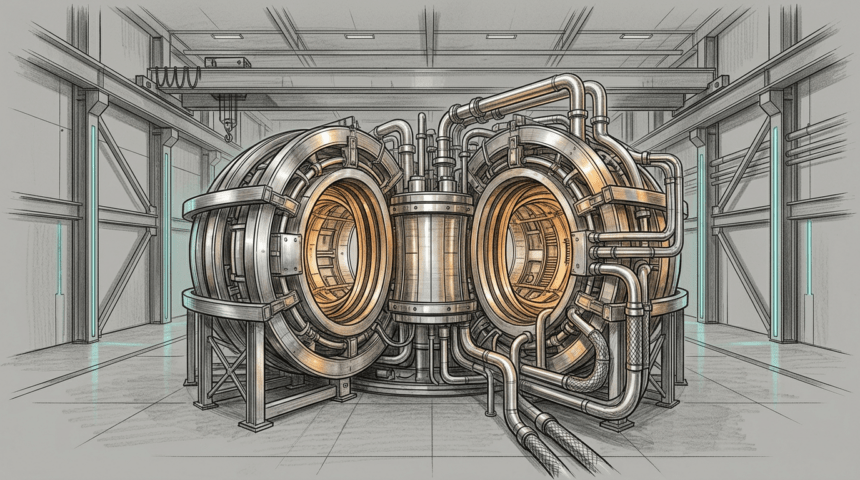
Most fusion headlines belong to the reactors, but a Japanese supplier argues the fuel cycle is where power plants will live or die. Kyoto Fusioneering has started work on Unity-3, a test device that will validate breeding blanket technology with Oak Ridge National Laboratory.
Breeding blankets do double duty inside a fusion plant: they harvest heat from the reactor while generating fresh fuel. One design uses liquid lithium, which absorbs neutrons and splits into helium and tritium, an isotope of hydrogen that many reactor designs burn. The device will test liquid lithium alongside a range of other blanket materials, giving startups data they have so far only simulated.
The company has pulled in $121 million in committed capital, according to FusionX, and just landed grants from the US Department of Energy and the state of Tennessee. It is also moving its US headquarters to Oak Ridge, home of the national lab it is working with.
Kyoto Fusioneering has quietly become one of the biggest names in the fusion supply chain. More than half of fusion startups told the Fusion Industry Association they plan to work with external suppliers on fuel cycle technologies, and the company also builds plasma heating systems and equipment to recycle unburned fuel.
The Tennessee project is a milestone for an industry where most work remains on paper. If Unity-3 proves the blankets perform as modeled, it clears a major hurdle for the dozens of companies trying to plug fusion into the grid this decade.