Two rival approaches to a useful quantum computer now sit in Britain, and one Silicon Valley investor has funded both of them.
A Series A of more than $100M went to Universal Quantum, which stitches trapped-ion chips together into bigger machines. DCVC co-led that round with Firgun Ventures, a London quantum-focused fund, after DCVC had co-led a $160M raise in May for Quantum Motion and its silicon qubits. Joining were EDBI, Main Sequence, Hostplus, NGS Super, IAG Capital, EdenBase, Roblox chief executive Dave Baszucki, Nauta Capital and The Venture Collective.
Both founders hold professorships at the University of Sussex, which called the round a record for its spin-outs. By Universal Quantum’s account it is the biggest ever raised by a quantum company headquartered in the UK.
Charged atoms, held by fields and lasers
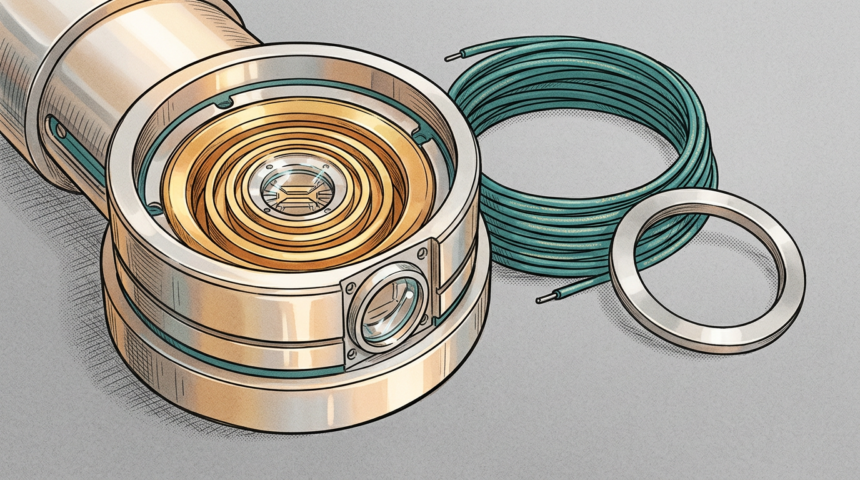
In this design charged atoms serve as qubits, pinned by electromagnetic fields and steered with lasers. Fidelity and connectivity are the selling points rather than raw clock speed, and the modular route entangles many small modules rather than scaling one giant device.
DCVC argues scale on either side of the physics split. Prineha Narang, an operating partner there, described silicon as the foundation that scales when Quantum Motion raised. General partner James Hardiman now makes the same argument for ions.
Three UK quantum rounds in 2026 have drawn Firgun money, no two on the same physics, including Oxford Quantum Circuits’ GBP 260M Series C, which the firm calls Europe’s largest private quantum round. Zeynep Koruturk, its founder, has argued that seed capital is abundant while credible Series A and B leaders are scarce.
Sebastian Weidt, the chief executive, reads the raise as endorsement of one of the more credible routes to utility-scale machines. Error rates, not cheque size, are what will settle it.