
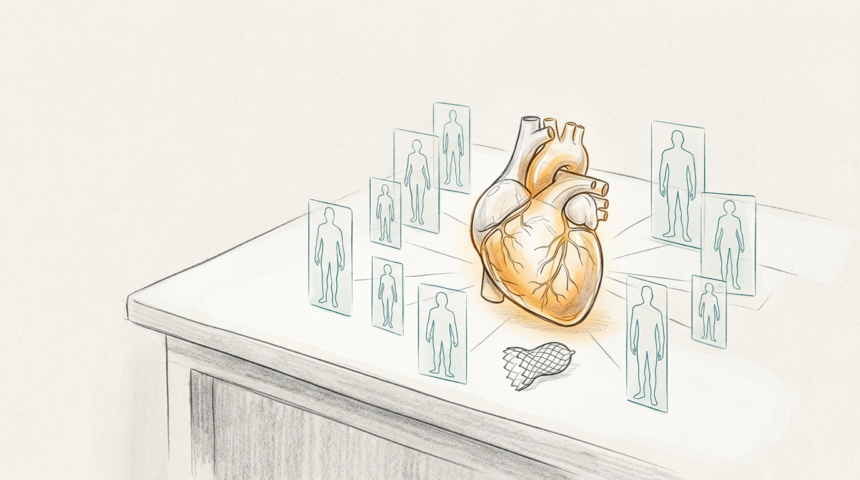
Heart valves and stents reach patients after trials of a few hundred people. One review of 195 high-risk implant trials found women made up 33% of participants, falling to 29% in cardiovascular studies.
adsilico wants that gap closed before a device is ever implanted. The University of Leeds spin-out builds synthetic patient populations from anonymised clinical scans, then simulates how a device behaves inside each one. It has now raised £10M in Series A funding to expand the work.
PXN Ventures led the round. Northern Gritstone, which put in £5M, and Parkwalk returned after backing a £3.5M seed in 2024. Headcount at the Nexus innovation hub goes from 14 to 34.
From hearts into brains
Its Virtual Chimera platform varies populations by age, sex, ethnicity, body size and disease, letting manufacturers see how an implant performs in a defined group before committing to trials. That can steer which sizes get built and flag patients who carry more risk.
The money moves the company beyond virtual hearts into neurovascular devices such as flow diverters, used for aneurysms, where trial cohorts are thinnest. adsilico says projects with heart valve and neurovascular manufacturers are already complete.
Regulators are leaning the same way. The UK device regulator is drafting stronger guidance on diversity in testing after the Whitehead review, and the FDA has published guidance on computer modelling as evidence.
Chief executive Sheena Macpherson, who co-founded the business with Dr Nishant Ravikumar and Dr Zeike Taylor, said virtual populations should mirror real-world diversity. Repeat contracts, not one-off projects, are the next marker.