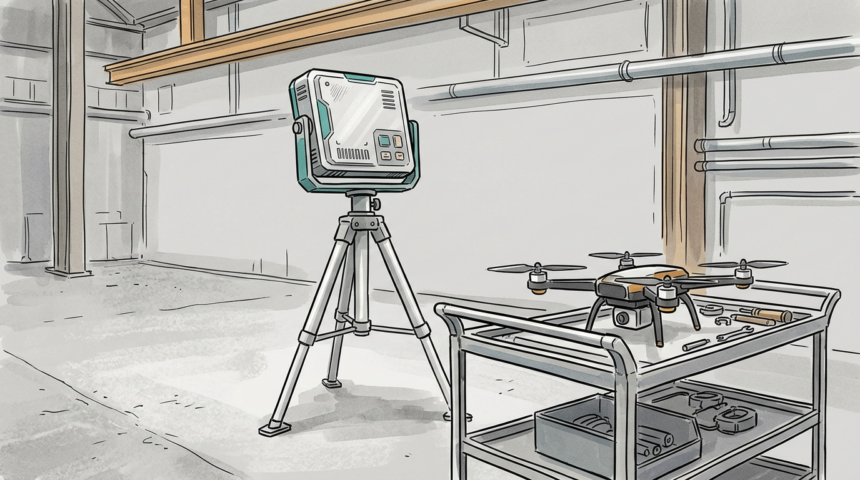
Shield AI agreed to acquire Echodyne, a Kirkland company building compact radar that detects and tracks drones, in a transaction valued at up to $5.3B and a significant exit for Seattle’s deep-tech scene.
Payouts split across two stages: $4.8B lands at closing, then a further $500M is contingent on the target clearing performance targets. San Diego-based Shield is raising $2.5B to cover it, of which $1B is fresh capital priced at a $28.8B valuation, over twice the $12.7B mark set in March. Should the transaction die, that financing falls away.
From an invention lab to the radar supply chain
Backers including Bill Gates and Madrona put $15M behind the firm when it left Bellevue’s Intellectual Ventures in 2014. Roughly $200M has gone in since, and PitchBook priced the company at $485M after its 2022 round, so patient investors are booking a substantial markup.
More than 40 countries run this hardware inside counter-drone and security installations, equipping remote weapon stations, high-energy lasers and microwave weapons. It also steers interceptors toward incoming drones. Airports and stadiums rely on the same gear to detect unauthorised aircraft. Headcount sits near 400, against 260 when a $40M Woodinville factory opened in July, and none of those jobs will go.
Why a software house went shopping for hardware
Hivemind autonomy software and the V-BAT drone made Shield’s name, and every sale until now went to government end users. Chief executive Gary Steele calls this the first move into hardware with civilian uses too, and stadium security is among the obvious markets.
Regulators still have to clear the deal, which is expected to close in early 2027.