A year after closing its $160M Series C, Harbinger has banked another $240M in a Series D, and the Los Angeles electric truck maker is no longer selling only to parcel fleets.
The company now counts more than $650M raised in total, Bloomberg News reported first. Tiger Global shared the lead with Capricorn’s technology impact fund and Ridgeline, a firm focused on defense deals.
FedEx, which led the previous round, came back for more. Maniv, Greycroft and Leitmotif, the Volkswagen-backed fund, also returned, and Fidelity Management joined as a new name, a type of investor that usually buys into companies close to going public. Harbinger is said to be weighing a listing.
FedEx keeps pulling the relationship tighter
An order for 2,000 trucks, worth over $300M, landed recently, and Paul Melander, FedEx’s senior vice president of safety and transportation, now sits on Harbinger’s board.
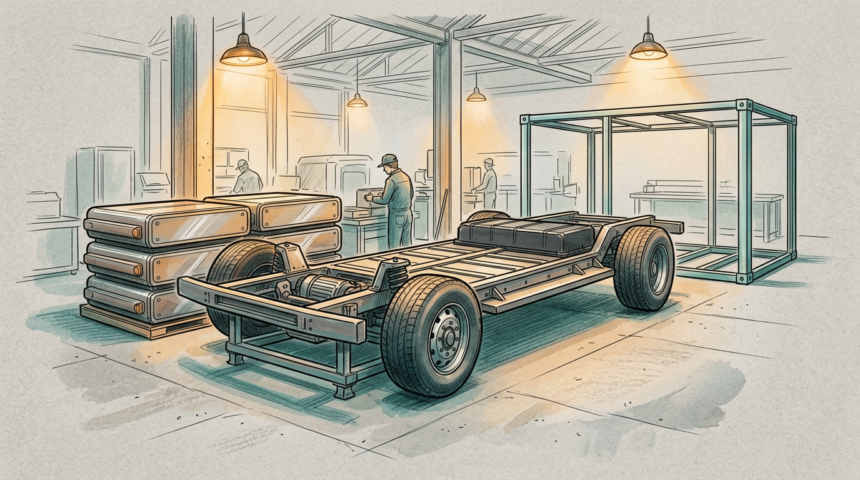
The 2022 launch came from people who had worked at Canoo, an EV startup that later collapsed, and at QuantumScape, a battery company, and it offered one electric chassis and nothing else. Since then the lineup has broadened: Phantom AI, an autonomy startup, was bought in February, hybrid emergency vehicles followed, and a driverless hybrid electric platform for military use has been shown.
Chassis makers learn to sell to the Pentagon
Selling to defense buyers widens the pool of customers in a way fleet sales cannot. Commercial demand swings with the economy and buyers haggle over price, while military procurement means programs that run for years. Harbinger frames its chassis as dual-use hardware.
Execution is the risk. Qualification for defense work takes time, and the fleet business still expects attention at the same moment.