By the end of October, Dongfeng expects its humanoid, Xiaodong, to be learning on one of its own factory floors, according to Zhang Zhenlin, the automaker’s chief engineer for intelligent technology.
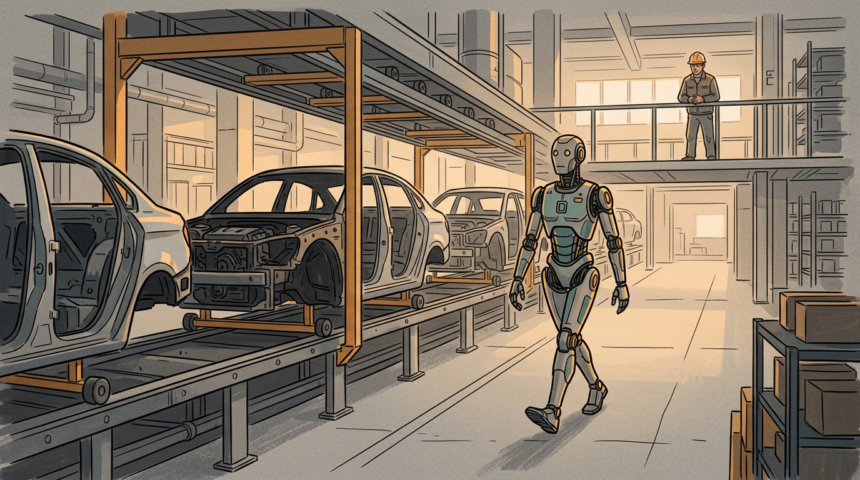
The plan runs faster than most. Trial production involving the robot is expected before the end of this year, with small-batch production set for next year. That is an unusually concrete schedule for a humanoid programme, and it points the machine at Dongfeng’s own assembly lines rather than a demo stage.
Dongfeng is not alone in testing that route. Carmakers have become the most eager first customers for humanoids because their plants already run structured, repetitive tasks that are expensive to re-tool for a traditional arm, and because they can absorb early failures inside their own operations.
The broader question is whether the hardware can hold up. Most humanoid deployments so far are pilots with a handful of units and a support team standing nearby. Moving to small-batch production means Dongfeng believes the robot can work a shift without someone rebuilding it every week.
For the wider robotics supply chain, that is the milestone to watch. Automakers supplying their own factories are effectively paying to prove a market before they have to sell one.