
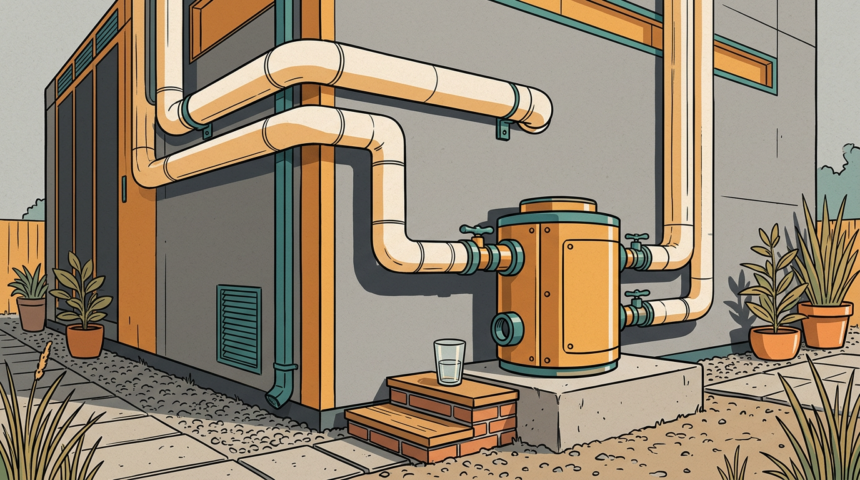
Cooling servers consumes vast quantities of water, and Atoco intends to hand some of it back. Based in California, the company draws drinking water from ordinary air and drives the process with heat captured from server rooms.
At an Irvine demonstration in September, roughly 65 degrees Celsius was fed into one of its units, and water soon came out of the tap. Metal-organic frameworks underpin the technology. These highly porous materials earned the 2025 Nobel Prize in Chemistry for Atoco co-founder Omar Yaghi; a single gram holds an internal surface area equal to about two soccer fields, and the pores can be engineered to pull water vapor from air as dry as 10 to 20 percent humidity.
According to the company, no electricity is required for harvesting, and heat of about 38 degrees Celsius is sufficient to free the trapped water. Waste heat from a small 20-kilowatt data center lets the demo unit yield as much as 300 liters per day, while a commercial version capable of 1,000 liters a day is being built.
Chief executive Samer Taha puts the number of completed prototype trials at five, all with partners across the Gulf and the US, and says discussions about pilots are ongoing with major technology firms. A first order could arrive before the year is out.
Why it matters: larger data centers are already nudged toward waste-heat reuse by the EU’s Energy Efficiency Directive, and Brussels aims to triple capacity by 2035. Turning that obligation into a source of water gives the startup two regulatory tailwinds.