
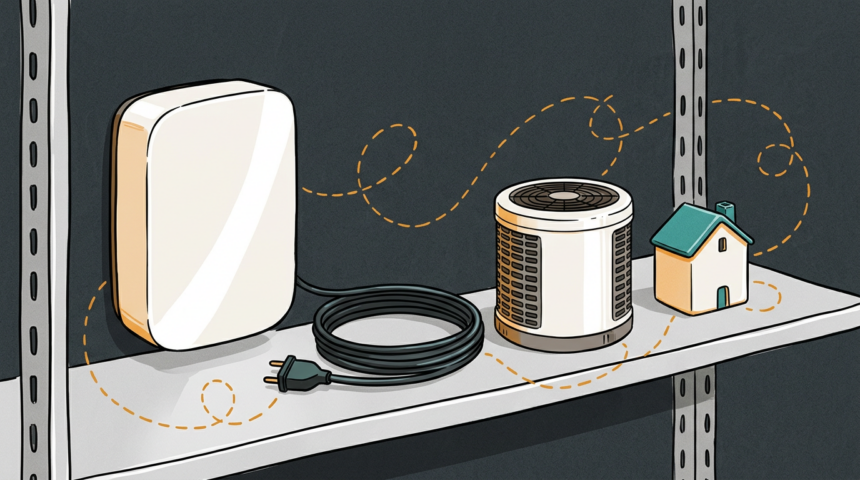
Hardware for the home is multiplying faster than any grid can coordinate it. Software that treats thousands of houses as a single flexible asset is how Rabot Energy proposes to fix that mismatch.
A $50M Series B has now been closed by the Berlin-based company to carry the plan further. Leading it was Endeit. The DeepTech and Climate Fonds, known as DTCF, came in alongside. Capital already on the cap table — vent.io, Bosch Ventures, CNI, Acurio Ventures, HV Capital and High-Tech Gruenderfonds (HTGF) — came back in as well.
Dynamic electricity tariffs are what Rabot sells, and they nudge demand into the hours when power is cheapest and renewables are most abundant. Connected home batteries can also be steered by its systems to bank that power and give it back later, which lightens the load on supply and curbs dependence on fossil-fired generation.
June 2026 brought a consumer bundle called Rabot Flow. Three parts make it up: a smart meter, a plug-and-play battery and a dynamic tariff. No rooftop solar is needed, any standard socket will do, and renters can use it too. Household energy bills, by the firm’s own estimate, drop roughly 15%.
Aggregation is the larger prize. Batteries spread across many homes are being pooled by Rabot into a virtual power plant, so that storage and consumption can be coordinated between households and handed to grid operators as one flexible block of capacity rather than scattered devices.
Crowded ground, that model. Battery manufacturers, utilities and a long list of energy startups are all chasing control of the home’s electricity flow, and whoever signs up enough devices to matter to a grid operator wins.
Device support and German expansion are what the new money is earmarked for, including work on heat pumps and EV chargers.