
TechflierTechflierTechflier
  • Home
  • News
  • Features
  • Spotlight
  • About
    • Mission
    • Services
    • Contact
  • Newsletter
  • Shop
    • All Items
    • By Category
      • Bags
      • T-Shirts
    • Cart
Search
© 2025 Techflier. All Rights Reserved.
Reading: Bristol firm condenses ophthalmology hardware down to silicon assembly
Share
Font ResizerAa
TechflierTechflier
Font ResizerAa
  • Home
  • News
  • Features
  • Spotlight
  • About
  • Newsletter
  • Shop
Search
  • Home
  • News
  • Features
  • Spotlight
  • About
    • Mission
    • Services
    • Contact
  • Newsletter
  • Shop
    • All Items
    • By Category
    • Cart
Have an existing account? Sign In
Follow US
© 2025 Techflier. All Rights Reserved.
News

Bristol firm condenses ophthalmology hardware down to silicon assembly

Siloton secured an GBP 8.4M Innovate UK contract to finish clinical trials of its chip-based retinal scanner and cut years off the path to NHS use.

Techflier Staff
Last updated: October 20, 2026 2:03 am
Techflier
Share
SHARE

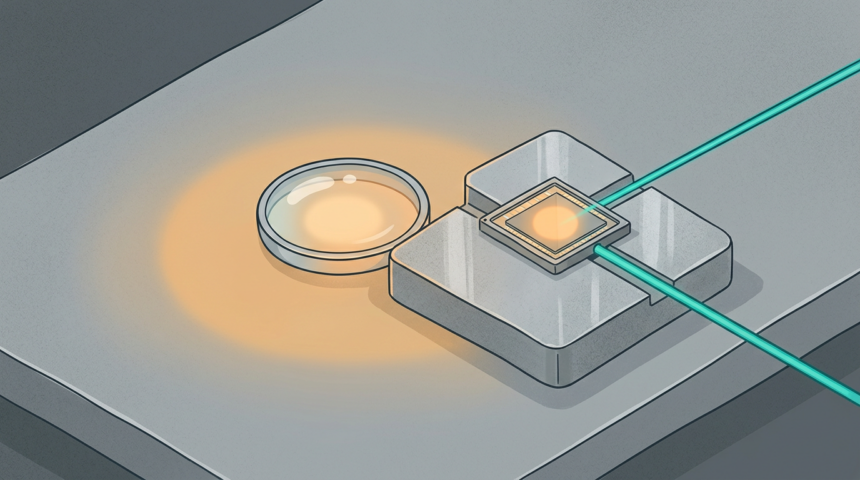
A hospital-grade eye scanner currently means a heavy tabletop machine and a months-long wait. Bristol’s Siloton wants the same scan from a chip smaller than a pound coin.

The University of Bristol spin-out won £8.4M from Innovate UK through its Contracts for Innovation: Quantum Missions Primer programme, delivered over two years. The money speeds up design and trials for the in-clinic and at-home versions of GiraffeOCT, its optical coherence tomography device, and the company thinks it could take two years off development.

Optical coherence tomography uses light to image the retina, catching conditions early and tracking them over time. Existing systems are large, costly and mostly confined to hospitals and optometry practices, which limits reach in rural areas. Ophthalmology is the busiest NHS outpatient specialty, with about nine million attendances in England in 2023/24 and nearly 623,000 people waiting at the end of July 2026, 8.7% of all NHS waits.

A chip the size of a coin

Siloton compresses a tabletop’s worth of fragile optics onto a single photonic chip. The GiraffeOCT is built as a binocular-style unit intended for clinics and eventually homes, with a second-generation BlueJay chip and a cloud platform behind the service.

Sunderland Specialist Eye Hospital will run clinical trials of the in-clinic device, and York Health Economics Consortium will sharpen NHS cost estimates from the data. Headcount is set to reach 16 by August 2028.

Chief executive Alasdair Price said the contract helps the company through the phase where deep-tech hardware usually stalls, and that fresh investment will follow to fund CheetahOCT, a device built to resolve separate retinal layers and widen the list of conditions it can spot. The European Space Agency, which needs to monitor astronaut vision, is already a customer.

Poseidon Aerospace banks $60M to fly cargo planes without pilots
British Business Bank puts £180M into six AI and deeptech funds
Sebastian Kurz built a $3 billion AI cybersecurity startup after politics
Yali Capital leads an $85M round for e-motorcycle maker Ultraviolette
Gaius Capital closes its first fund at €56M for Mittelstand deals
TAGGED:Bristoldeep techeye healthInnovate UKmedtechphotonicsSiloton
SOURCES:SilotonThe Quantum Insider
Share This Article
Facebook Copy Link Print
Previous Article Stockholm property software outfit exits quiet mode with seed round
Next Article Pant Project lands Rs 109 crore to take menswear into 150 stores

Get Some Gear


Quick Links

  • News
  • Features
  • Spotlight
  • Newsletter
  • Store

About Techflier

  • About Techflier
  • Services
  • Contact Us
  • Privacy
  • Legal

Indices

TechflierTechflier
Follow US
© 2026 Techflier. All Rights Reserved.
Welcome Back!

Sign in to your account

Username or Email Address
Password

Lost your password?